Support our educational content for free when you buy through links on our site. Learn more

How Much Does It Cost to Professionally Record a Song? 🎙️ (2025)


Ever wondered what it really takes to get your song sounding like a polished hit? Whether you’re dreaming of studio magic or considering a home setup, the cost to professionally record a song can be surprisingly complex—and wildly variable. From booking pricey studio time to hiring producers, engineers, and session musicians, the expenses add up quickly. But don’t worry, we’ve cracked the code for you!
In this article, we’ll break down every cost factor, compare DIY vs. pro studios, and reveal insider tips to save money without sacrificing quality. Plus, we’ll dive into whether tools like Auto-Tune Pro or Auto-Tune Unlimited are worth the investment. Ready to find out how to get the best bang for your buck and avoid common budget traps? Keep reading—you might be surprised by what you learn!
Key Takeaways
- Professional recording costs vary widely, typically ranging from a few hundred to tens of thousands of dollars depending on studio, personnel, and post-production needs.
- Studio time, producer/engineer fees, and mixing/mastering are the biggest expenses to budget for.
- Home studios offer cost-effective flexibility, but require upfront investment and technical know-how.
- Hiring experienced session musicians and producers can save time and improve quality, even if they cost more upfront.
- Mixing and mastering are essential steps that should never be skipped for a professional sound.
- Auto-Tune Unlimited offers great value for vocal production tools, especially with its free 14-day trial.
- Preparation and rehearsal are your best money-savers—the more ready you are, the less studio time you’ll need.
Ready to make your song come alive without breaking the bank? Let’s dive into the full breakdown!
Table of Contents
- ⚡️ Quick Tips and Facts About Professional Song Recording Costs
- 🎙️ The Evolution of Song Recording: From Garage to Pro Studio
- 💸 How Much Does It Really Cost to Record a Song Professionally?
- 1. Studio Time Rates Explained: Hourly, Daily & Project-Based Pricing
- 2. The Role of Producers, Engineers, and Session Musicians in Your Budget
- 3. Mixing and Mastering Fees: What to Expect
- 🏠 Home Recording vs. Pro Studio: Cost-Benefit Breakdown
- 🎛️ Essential Gear and Software Costs for DIY Recording
- 🎤 AutoTune Pro and AutoTune Unlimited: Are They Worth the Investment?
- 🎁 Unlocking Creativity: KOSTENLOSE 14-Tage-Testversionen for Music Production Tools
- 📊 Song Cost Comparison: Budget vs. Premium Recording Experiences
- ⚖️ Balancing Cost, Quality, and Convenience: What’s Right for You?
- 💡 Insider Tips to Save Money Without Sacrificing Sound Quality
- 🎵 Beyond Recording: Additional Expenses You Might Overlook
- 📚 Verwandte Inhalte: More Resources on Music Production and Recording Costs
- 📝 Conclusion: Making Smart Choices for Your Song Recording Budget
- 🔗 Recommended Links for Professional Music Production
- ❓ Häufig gestellte Fragen (FAQ) About Recording Song Costs
- 📖 Reference Links and Further Reading
Alright, let’s pull back the curtain! You’ve poured your heart into writing a song, and now you’re wondering, “What’s it really going to cost to make this thing sound like it belongs on the radio?” As the expert team at Make a Song™, we’ve navigated these waters countless times, and we’re here to give you the straight-up, no-nonsense guide to budgeting your masterpiece.
The short answer? It’s complicated! The cost to professionally record a song can range from a few hundred dollars to tens of thousands. That’s a huge spread, right? It’s like asking how much a car costs—are we talking about a reliable used sedan or a brand-new Italian sports car?
This article will break down every single cost factor, from studio time and producer fees to the often-overlooked expenses that can sneak up on you. We’ll compare the scrappy DIY home studio route with the full-blown professional studio experience and help you figure out where your project fits. Ready to demystify the dollars and cents? Let’s dive in.
⚡️ Quick Tips and Facts About Professional Song Recording Costs
Pressed for time? Here are the essential takeaways before we get into the nitty-gritty.
- Wildly Variable Costs: A single professionally recorded song can cost anywhere from $200 to $20,000+. The final number depends heavily on the studio, the personnel you hire, and your location.
- The Big Three Costs: Your budget will primarily be consumed by three things: studio time, personnel (producer, engineer), and post-production (mixing and mastering).
- Pro Studio vs. Home Studio:
- ✅ Professional Studio: Offers top-tier equipment, acoustically treated rooms, and experienced staff. Expect to pay for the premium experience.
- ✅ Home Studio: A budget-friendly alternative that offers flexibility and control. Initial setup costs can range from $500 to over $4,000.
- Don’t Forget the People: Hiring a producer can cost between $500 and $5,000+ per song, depending on their experience. Session musicians might charge around $50-$150 per hour.
- Preparation is Key: The most effective way to save money is to be thoroughly rehearsed. Studio time is money, and practicing on the clock is a budget-killer.
- Mixing & Mastering are Crucial: These final steps are non-negotiable for a professional sound. Mixing can range from $200 to over $1,000 per song, while mastering is typically a bit less.
- The “Good, Fast, Cheap” Rule: A famous adage in any creative industry says you can only pick two. As the first YouTube video in this article wisely points out, if you want your recording to be good and fast, it won’t be cheap. If it’s fast and cheap, it probably won’t be good. And if it’s cheap and good, it will likely take a long time.
🎙️ The Evolution of Song Recording: From Garage to Pro Studio
Ever wonder how we got from scratchy garage recordings to the polished tracks we hear today? The journey of song recording is a fascinating tale of technological leaps and creative bounds. Decades ago, the only way to get a professional sound was to book time in a massive, expensive studio filled with intimidating analog gear. Think Abbey Road or Capitol Studios—legendary spaces that were financially out of reach for most aspiring artists.
Then, the digital revolution happened. The rise of Digital Audio Workstations (DAWs) like Pro Tools and Ableton Live democratized music production. Suddenly, the power of a multi-million dollar studio could be condensed into a laptop. This shift gave birth to the home studio, empowering artists to record entire albums from their bedrooms.
This evolution has created a spectrum of options for today’s musicians. You can go the full DIY route, book time at a mid-tier project studio, or go all-in at a world-class facility. Understanding this history helps you appreciate the choices you have and make informed decisions that align with your budget and artistic vision. For more on how the industry has changed, check out our Music Industry Insights.
💸 How Much Does It Really Cost to Record a Song Professionally?
So, you’re ready to get a real number. While we can’t give you an exact figure without knowing your project’s specifics, we can break down the components that make up the total cost. Think of it like building a custom meal; each ingredient has its own price. This is a different beast than figuring out how much it costs to have a song written for you, which is the first step in the creative process. Now, we’re talking about bringing that written song to life.
The primary cost drivers are:
- Studio Time: The rental fee for the physical space and its equipment.
- Personnel: The fees for the creative and technical experts who will help you.
- Post-Production: The crucial final steps of mixing and mastering.
Let’s break down each of these categories so you can start building a realistic budget.
1. Studio Time Rates Explained: Hourly, Daily & Project-Based Pricing
Booking a studio is often the biggest line item in a recording budget. Rates can vary dramatically based on the studio’s location, reputation, and the quality of its gear. A top-tier studio in a major city like Los Angeles or New York might charge hundreds per hour, while a smaller project studio in a less competitive market could be significantly more affordable.
Here’s how studios typically structure their pricing:
| Pricing Model | Typical Range (per hour) | Best For… | ✅ Pros | ❌ Cons |
|---|---|---|---|---|
| Hourly Rate | $30 – $500+ | Short sessions, vocal tracking, overdubs. | Flexibility for small tasks. | Can add up quickly; pressure to rush. |
| Daily Rate (Block Booking) | Varies (e.g., 8-10 hour day) | Full bands, tracking multiple instruments. | Often a discounted rate compared to hourly. | Less flexible if you finish early. |
| Per-Song / Project Rate | Varies widely | Demos, EPs, or full albums. | Predictable, all-in cost. | May be less cost-effective for very efficient artists. |
Our Advice: For your first time in a pro studio, an hourly rate might seem appealing, but it can create a stressful, clock-watching environment. If you’re recording a full song with multiple parts, ask about a day rate or a per-song package. This often includes an engineer and can provide a more relaxed and creative atmosphere. As one industry pro noted, “An empty studio is not a happy place. Always ask for any special rates.”
2. The Role of Producers, Engineers, and Session Musicians in Your Budget
You’re not just paying for a room with cool gear; you’re paying for the expertise of the people operating it. Don’t underestimate the value these roles bring to your project!
Music Producers
A great producer is your creative partner. They help shape the song’s arrangement, guide your performance, and make critical decisions to bring your artistic vision to life.
- Cost: Can range from $300 to over $5,000 per song. Some up-and-coming producers may charge a lower flat fee, while seasoned pros with hit records can command top dollar and may also ask for royalty points (a percentage of the song’s future earnings).
Audio Engineers
The engineer is the technical wizard responsible for setting up microphones, operating the recording software, and capturing the best possible sound.
- Cost: Often included in the studio’s hourly or day rate. If hired separately, expect to pay $25 to $75+ per hour. Some studios may have a junior engineer at a lower rate and a senior engineer at a premium.
Session Musicians
Need a killer guitar solo, a tight drum track, or a lush string section? Session musicians are hired guns who can come in and nail their parts with professional precision.
- Cost: Typically ranges from $50 to $150 per hour per musician. Hiring seasoned pros can save you money in the long run, as they work quickly and efficiently. As one studio owner advises, “Don’t ever fall into the trap of hiring musicians just on price. A $40/hour musician may take three times as long to record a song as an $80/hour musician.”
3. Mixing and Mastering Fees: What to Expect
Recording the parts is only half the battle. The post-production phase is where your song transforms from a collection of raw tracks into a polished, professional-sounding final product.
Mixing 🎧
Mixing is the process of blending all the individual recorded tracks (vocals, drums, guitars, etc.) together. The mix engineer adjusts levels, panning, and effects to create a cohesive and emotionally impactful soundscape.
- Cost: Expect to pay anywhere from $200 to $1,000+ per song. Entry-level engineers may charge less, while sought-after mixers with major label credits will be at the higher end of that spectrum.
Mastering 🔊
Mastering is the final step. A mastering engineer takes the final mix and applies subtle EQ, compression, and limiting to ensure the song sounds great on all playback systems—from earbuds to car stereos to club speakers.
- Cost: Generally less expensive than mixing, ranging from $50 to $300+ per song. There are also automated online mastering services like LANDR and eMastered, which offer a more affordable, AI-driven alternative.
Key Takeaway: Do not skip these steps! A great recording can be ruined by a poor mix, and a great mix won’t translate properly without professional mastering. Budget for them from the start.
🏠 Home Recording vs. Pro Studio: Cost-Benefit Breakdown
One of the biggest decisions you’ll make is where to record. Both paths have distinct advantages and disadvantages. Here at Make a Song™, we have tons of resources for building your own DIY Recording Studio, but it’s important to know what you’re trading off.
| Feature | 🏢 Professional Studio | 🏠 Home Studio |
|---|---|---|
| Sound Quality | Superior acoustics, high-end microphones, and outboard gear. | Dependent on your gear and room treatment. Can be excellent but requires knowledge. |
| Cost | High per-hour/per-day cost. | High initial investment, but “free” to use once set up. |
| Expertise | Access to experienced engineers and producers. | You are the engineer. Steep learning curve. |
| Environment | Professional, focused atmosphere. Can be inspiring or intimidating. | Comfortable and familiar. Can be prone to distractions. |
| Time | Limited by your budget. The clock is always ticking. | Unlimited time to experiment and revise. |
| Best For | Full bands, critical vocal/drum tracking, final mixing. | Demos, songwriting, overdubs, electronic music, learning production. |
The Hybrid Approach: Many artists use a hybrid model. They might record foundational tracks like drums and bass in a professional studio to capture a big, clean sound, then record vocals, guitars, and synths in their home studio to save money and allow for more experimentation.
🎛️ Essential Gear and Software Costs for DIY Recording
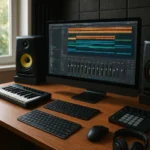
Decided to build your own creative sanctuary? Welcome to the club! The initial investment can be daunting, but owning your gear pays dividends in the long run. A basic but functional setup can be assembled for under $1,000, while a more professional rig can run into several thousand.
Here’s a shopping list of the essentials:
- Computer: The brain of your studio. Most modern laptops or desktops are powerful enough to start.
- Digital Audio Workstation (DAW): This is your recording software.
- Free/Budget: GarageBand (free for Mac users), Cakewalk by BandLab (free for Windows), Reaper (very affordable).
- Professional: Logic Pro (Mac only), FL Studio, Ableton Live.
- Audio Interface: This box connects your microphone and instruments to your computer.
- Popular choices: Focusrite Scarlett 2i2, Universal Audio Volt 2.
- Microphone: A quality condenser microphone is essential for vocals.
- Great starters: Audio-Technica AT2020, Rode NT1.
- Headphones: You’ll need closed-back studio headphones for recording and monitoring.
- Industry standards: Audio-Technica ATH-M50x, Sony MDR-7506.
- Studio Monitors (Optional but Recommended): These specialized speakers provide a flat, accurate sound for mixing.
- Budget-friendly: PreSonus Eris E3.5, Yamaha HS5.
👉 CHECK PRICE on:
- Focusrite Scarlett 2i2: Amazon | Sweetwater | Guitar Center
- Audio-Technica AT2020: Amazon | Sweetwater | Guitar Center
- Sony MDR-7506 Headphones: Amazon | Sweetwater | Walmart
🎤 AutoTune Pro and AutoTune Unlimited: Are They Worth the Investment?
Let’s talk about the elephant in the room: pitch correction. Once a studio secret, Antares Auto-Tune is now a household name and an indispensable tool for modern vocal production. But with different versions available, which one is right for you?
Product Rating: Auto-Tune
| Aspect | Rating (1-10) | Comments |
|---|---|---|
| Functionality | 10/10 | The industry standard for a reason. Incredibly powerful and versatile. |
| Ease of Use | 7/10 | Auto mode is straightforward, but Graph Mode has a steep learning curve. |
| Sound Quality | 9/10 | Can be transparent and natural or a hard-tuned creative effect. |
| Value | 8/10 | Subscription model offers great value; perpetual licenses are pricey. |
Auto-Tune Pro vs. Auto-Tune Unlimited
- Auto-Tune Pro: This is the flagship, standalone version. It includes both the easy-to-use real-time Auto Mode and the incredibly detailed Graph Mode for surgical pitch editing. It’s the choice for professionals who need maximum control.
- Auto-Tune Unlimited: This is a subscription service that gives you access to every version of Auto-Tune (including Pro) plus their entire suite of vocal effects plugins.
Our Recommendation: For most aspiring artists and producers, Auto-Tune Unlimited is the better value. The subscription gives you a massive toolkit of creative plugins beyond simple pitch correction. If you’re a professional recording engineer who lives and breathes vocal tuning, buying the perpetual license for Auto-Tune Pro might make more sense long-term. But for everyone else, the subscription is the way to go.
👉 CHECK PRICE on:
- Auto-Tune Pro: Antares Official Website | Sweetwater
- Auto-Tune Unlimited: Antares Official Website
🎁 Unlocking Creativity: KOSTENLOSE 14-Tage-Testversionen for Music Production Tools
Feeling overwhelmed by all the software options? Here’s a pro tip: almost every major music software company offers a free trial. This is your golden ticket to test-drive these powerful tools before committing your hard-earned cash.
Antares, for example, offers a KOSTENLOSE 14-Tage-Testversion (that’s a free 14-day trial) for their Auto-Tune Unlimited subscription. This is the perfect opportunity to explore their entire suite of plugins and see how they can elevate your sound.
Don’t just stop at Auto-Tune! Most DAWs like Ableton Live and FL Studio, as well as plugin suites from companies like Waves and iZotope, offer similar trials. Use them! It’s the smartest way to build a software toolkit that you’ll actually use.
📊 Song Cost Comparison: Budget vs. Premium Recording Experiences
To put it all together, let’s imagine two different scenarios for recording a single song.
| Expense Item | 👟 The Indie Budget Approach | 💎 The Premium Label Approach |
|---|---|---|
| Tracking/Recording | DIY at home (gear cost spread over time) | 2 days at a top-tier studio |
| Producer | Self-produced or a flat fee for an up-and-coming producer | A-list producer with royalty points |
| Session Musicians | Programmed drums/synths, artist plays instruments | Hired professionals for drums, bass, strings, etc. |
| Mixing | Mid-tier online mixing service | Renowned mix engineer |
| Mastering | Automated online service (e.g., LANDR) | Top mastering house |
| Estimated Total | $400 – $2,000 | $5,000 – $20,000+ |
As you can see, the choices you make at each stage have a massive impact on the final cost. There’s no “right” way—it’s all about what’s appropriate for your goals and your budget.
⚖️ Balancing Cost, Quality, and Convenience: What’s Right for You?
The ultimate goal is to find the sweet spot between your budget, the sound quality you’re aiming for, and the convenience of the process. This brings us back to the “Good, Fast, Cheap” triangle.
- Want a radio-ready hit (Good) and need it done next month (Fast)? Prepare to open your wallet. It won’t be Cheap.
- Need a demo recorded (Cheap) by this weekend (Fast)? You’ll likely be working with less experienced people or cutting corners, so it might not be Good.
- Want a professional sound (Good) on a tight budget (Cheap)? It’s possible, but it will take a lot of your own time and effort (i.e., it won’t be Fast).
There is no magic formula. The key is to be honest about your priorities. Are you trying to get signed? Then investing in higher quality is crucial. Are you just trying to get your ideas down and share them with friends? A DIY approach is perfect. Your music, your money, your choice.
💡 Insider Tips to Save Money Without Sacrificing Sound Quality
As veterans of countless studio sessions, we’ve learned a few tricks to make a budget stretch without compromising the final product.
- Rehearse, Rehearse, Rehearse! We can’t say this enough. Time is money in the studio. Know your parts inside and out before you press record.
- Do Your Pre-Production. Have your song structure, tempo (BPM), and key figured out beforehand. Send a rough demo to the engineer or producer ahead of time.
- Bundle Your Services. If you’re booking a studio for tracking, ask if they offer a package deal that includes mixing and mastering. This can often lead to significant savings.
- Leverage Your Network. The music business is built on relationships. A friend of a friend who’s an aspiring engineer might give you a great rate to build their portfolio.
- Record During Off-Peak Hours. Some studios offer lower rates for sessions on weekdays or late at night when they’re less busy. It never hurts to ask!
- Use a Hybrid Approach. As mentioned earlier, record complex instruments like drums in a pro studio, but handle vocals and other overdubs at home.
🎵 Beyond Recording: Additional Expenses You Might Overlook
The costs don’t always stop once the master is delivered. Here are a few other potential expenses to keep in mind:
- Artwork: Your song needs a cover! This can range from a DIY design to hiring a professional graphic artist.
- Distribution: To get your song on Spotify, Apple Music, and other platforms, you’ll need a distribution service like DistroKid or TuneCore. These usually involve a small annual fee.
- Cover Song Licensing: Recording a song written by someone else? You must obtain a mechanical license. This is a legal requirement. Services like Easy Song or TuneCore can handle this for you for a small fee plus the royalty payments owed to the original songwriter. The cost is set by law and is very affordable.
- Promotion & Marketing: How will people hear your song? This could involve anything from running social media ads to hiring a publicist.
📚 Verwandte Inhalte: More Resources on Music Production and Recording Costs
This is a huge topic, and we’ve only scratched the surface! As you continue your journey, you’ll find a wealth of information to help you make the best decisions for your music. From tutorials on creating melodies to deep dives into the music business, the more you learn, the more empowered you’ll be. For more inspiration, check out our articles on Melody Creation and Lyric Inspiration.
📝 Conclusion: Making Smart Choices for Your Song Recording Budget

Phew! That was a deep dive, wasn’t it? By now, you’ve got a solid grasp of the many moving parts that influence how much it costs to professionally record a song. From the studio time and personnel fees to the crucial mixing and mastering stages—and even the hidden extras like artwork and licensing—you’re armed with the knowledge to make savvy decisions.
Remember our earlier question: Is it better to go cheap, fast, or good? The answer is, as always, “it depends.” Your goals, your timeline, and your budget will shape the path you take. Want a polished, radio-ready track? Prepare to invest accordingly. Looking for a demo or a rough cut? A home studio or hybrid approach might be your best friend.
If you’re considering Auto-Tune Pro or Auto-Tune Unlimited, our expert team confidently recommends Auto-Tune Unlimited for most artists and producers. The subscription model offers unparalleled flexibility and access to a full suite of vocal production tools, making it a powerhouse for elevating your recordings without breaking the bank.
Ultimately, the best investment is in preparation. Rehearse your parts, plan your sessions, and communicate clearly with your team. This will save you time and money, and help you get the sound you envision.
Now that you know the ins and outs, it’s time to roll up your sleeves and start making your song happen. 🎶 Ready to hit record?
🔗 Recommended Links for Professional Music Production
Here are some top-tier products and resources to help you get started or upgrade your setup:
-
Focusrite Scarlett 2i2 Audio Interface:
Amazon | Sweetwater | Guitar Center -
Audio-Technica AT2020 Microphone:
Amazon | Sweetwater | Guitar Center -
Sony MDR-7506 Headphones:
Amazon | Sweetwater | Walmart -
Antares Auto-Tune Pro:
Antares Official Website | Sweetwater -
Antares Auto-Tune Unlimited:
Antares Official Website -
Recommended Books on Music Production:
❓ Häufig gestellte Fragen (FAQ) About Recording Song Costs

What factors influence the cost of professional song recording?
Several key factors determine the final cost:
- Studio quality and location: High-end studios in major cities charge premium rates due to their equipment and reputation.
- Personnel fees: Hiring producers, engineers, and session musicians adds to the budget.
- Length of studio time: More hours mean higher costs.
- Post-production: Mixing and mastering fees vary widely depending on the engineer’s experience and the complexity of the project.
- Additional expenses: Licensing, artwork, distribution, and promotion can add unexpected costs.
Understanding these helps you plan realistically and avoid surprises.
How can I reduce expenses when recording my own song?
Here are some proven strategies:
- Rehearse thoroughly before studio time to minimize wasted hours.
- Use a hybrid approach: Track drums or complex instruments in a pro studio, then finish vocals and overdubs at home.
- Bundle services: Negotiate packages that include tracking, mixing, and mastering.
- Leverage free trials and affordable software: Use tools like the KOSTENLOSE 14-Tage-Testversion of Auto-Tune Unlimited to experiment without upfront costs.
- Record during off-peak hours: Studios often offer discounts for late-night or weekday sessions.
- Network: Collaborate with friends or emerging engineers who may offer discounted rates.
Read more about “How Much Does It Cost to Have a Song Made for You? 🎵 (2025)”
What is the average hourly rate for a professional recording studio?
Hourly rates vary widely:
- Project studios: Generally $30 to $75 per hour.
- Mid-tier studios: $50 to $150 per hour.
- Top-tier studios: $150 to $500+ per hour.
Rates often include an engineer, but confirm this upfront. Some studios offer day rates or project-based pricing, which can be more cost-effective for longer sessions.
Are there affordable alternatives to professional song recording studios?
Absolutely! Affordable options include:
- Home recording studios: With a modest investment in gear and software, you can produce high-quality recordings at home.
- Project studios: Smaller studios with good equipment and engineers who are building their portfolios.
- Online mixing and mastering services: Platforms like LANDR and eMastered offer budget-friendly post-production.
- DIY approach: Learning basic recording and mixing techniques yourself using free or low-cost DAWs like GarageBand or Reaper.
These alternatives can be great for demos, songwriting, or artists on a tight budget.
How long does it typically take to record a song in a professional studio?
The time depends on the song’s complexity and preparation. A well-rehearsed band might track a song in 8-12 hours, while more intricate productions can take days. Efficient pre-production and clear communication with your engineer can significantly reduce studio time.
What should I bring to a studio session to maximize efficiency?
Bring:
- Fully rehearsed parts and lyrics.
- Reference tracks that capture the sound you want.
- Any backing tracks or click tracks prepared in advance.
- A positive, collaborative attitude!
Preparation helps keep the session focused and productive.
Read more about “How to Create Music for Free: 10 Essential Tools & Tips 🎶 …”
📖 Reference Links and Further Reading
For further verification and deep dives, check out these reputable sources:
- Antares official site on Auto-Tune Pro and Auto-Tune Unlimited
- Focusrite Scarlett 2i2 official product page
- Audio-Technica AT2020 microphone details
- Sony MDR-7506 headphones overview
- Recording Connection’s detailed guide: How Much Does Studio Time Cost?
- LANDR and eMastered for online mastering services
- DistroKid and TuneCore for music distribution and licensing
These resources will help you continue your journey with confidence and clarity. Happy recording! 🎶