Support our educational content for free when you buy through links on our site. Learn more

What Are the 12 Basic Steps to Writing a Song? 🎵 (2025)

Ever wondered how your favorite hits come to life? Writing a song might seem like a mystical art reserved for rock stars and pop icons, but the truth is—it’s a craft anyone can learn! At Make a Song™, we’ve distilled decades of musical magic into 12 clear, actionable steps that will take you from a spark of inspiration to a fully polished track ready to share with the world.
Did you know the average hit song clocks in at just over 3 minutes? That means every second counts, and knowing how to structure your ideas efficiently is key. Later, we’ll reveal insider secrets on crafting unforgettable choruses, overcoming writer’s block, and even protecting your masterpiece legally. Plus, we’ll share pro tips on recording your song at home with gear you can actually afford.
Ready to turn your ideas into melodies that stick? Let’s dive in!
Key Takeaways
- Start strong with a compelling title and brainstorm questions to fuel your lyrics.
- Master the classic Verse-Chorus structure to keep listeners hooked.
- Craft melodies by singing your lyrics out loud and pairing them with simple chords.
- Develop your song section by section—verses set the scene, choruses deliver the emotional payoff, and bridges add surprise.
- Polish your song through self-editing and feedback before recording.
- Use affordable home studio gear like the Focusrite Scarlett 2i2 and Audio-Technica AT2020 to capture your sound professionally.
- Protect your work with copyright registration and share it widely via digital distribution platforms like DistroKid and TuneCore.
👉 Shop essential recording gear:
- Focusrite Scarlett 2i2: Sweetwater | Amazon
- Audio-Technica AT2020 Microphone: Sweetwater | Amazon
- Ableton Live DAW: Sweetwater | Guitar Center
Unlock your songwriting potential and start creating songs that resonate—your journey begins here!
Table of Contents
- ⚡️ Quick Tips and Facts
- 🎶 The Genesis of a Song: A Brief History of Musical Creation
- Before You Begin: Setting the Stage for Songwriting Success
- The Songwriting Journey: Our 12-Step Blueprint to Crafting Your Masterpiece
- 1. 🎯 Start with a Spark: Igniting Your Song’s Core Idea
- 2. 🏗️ Structure Your Story: Choosing Your Song’s Blueprint
- 3. ✍️ Craft Your Lyrical Masterpiece: Words That Resonate
- 4. 🎶 Melody & Harmony: Bringing Your Words to Life
- 5. 🧩 Develop Your Song in Sections: From Idea to Full Form
- 6. ✨ Polishing Your Gem: Refining and Enhancing Your Song
- 7. 🚧 Overcoming Creative Hurdles: Bouncing Back Stronger!
- 8. 🎙️ Recording Your Song: From Demo to Masterpiece
- 9. 🤝 Collaborating with Other Musicians: Two Heads Are Better Than One
- 10. 🛡️ Protecting Your Creation: Copyright Essentials for Songwriters
- 11. 🌐 Sharing Your Sound: Getting Your Music Heard
- 12. 📈 Continuous Growth: The Lifelong Journey of a Songwriter
- Genre Spotlight: Tailoring Your Songwriting Approach 🎸
- Recommended Resources for Aspiring Songwriters 📚
- Conclusion: Your Songwriting Journey Begins Now! 🎉
- Recommended Links
- FAQ: Your Burning Songwriting Questions Answered 🔥
- Reference Links
Here is the main body content for your article, crafted by the expert team at Make a Song™.
⚡️ Quick Tips and Facts
Welcome, future hitmaker! Before we dive deep into the magical, messy, and magnificent process of songwriting, let’s get you warmed up. Here at Make a Song™, we’ve seen it all, and we know that sometimes you just need the highlights. If you’re wondering, “How can I create my own song?”, you’ve come to the right place. This guide is your backstage pass.
Quick Tips for Aspiring Songwriters:
- ✅ Capture Everything: Inspiration is a fickle beast. Use the Voice Memos app on your phone, a dusty notebook, a napkin—whatever you have. That mumbled melody or weird phrase you thought of at 3 AM could be your next big hit.
- ❌ Don’t Strive for Perfection (at first): Your first draft is supposed to be a mess! It’s a block of marble. The sculpting comes later. Just get the ideas out. As our lead producer, Jax, always says, “You can’t polish a blank page.”
- ✅ Listen Actively: Don’t just hear music; dissect it. Why does that chorus work? What makes that bridge so emotional? Steal like an artist—learn from the greats to find your own voice.
- ❌ Don’t Wait for the Muse: Inspiration isn’t a lightning strike; it’s a muscle. The more you work it, the stronger it gets. Set aside regular time to write, even if it’s just 15 minutes a day.
- ✅ Collaborate: Feeling stuck? Two heads are often better than one. Working with another musician can unlock ideas you’d never find on your own.
| Songwriting Factoid 🤓 | The Nitty-Gritty Details |
|---|---|
| Most Common Song Structure | The Verse-Chorus-Verse-Chorus-Bridge-Chorus structure is the undisputed champion of pop music for a reason: it’s catchy, easy to follow, and provides a satisfying emotional arc. |
| The “Money” Notes | The highest notes in your chorus melody are often called the “money notes.” They create a point of emotional peak and are incredibly memorable for the listener. |
| Average Song Length | The average length of a song on the Billboard Hot 100 has been shrinking. In 2022, it was around 3 minutes and 7 seconds, down from over 4 minutes in the year 2000. Listeners’ attention spans are short! |
| Copyright is Automatic | In the U.S., your song is technically copyrighted the moment you create it in a “fixed, tangible form” (like a recording or written sheet). However, registering it with the U.S. Copyright Office is crucial for legal protection. |
🎶 The Genesis of a Song: A Brief History of Musical Creation
Ever wonder where songs even come from? It’s not like they just fall out of the sky (though sometimes it feels that way!). Humans have been at this for a long time. Think about it: long before there were DAWs, streaming services, or even guitars, there were people chanting stories around a fire, creating the first-ever verse-chorus structures to help everyone remember the tale.
From the epic poems of ancient Greece, which were originally sung, to the troubadours of the Middle Ages serenading nobles with tales of love and chivalry, songwriting has always been about one thing: telling a story with emotion.
The invention of the printing press in the 15th century allowed for the spread of sheet music, standardizing songs for the first time. Fast forward through the classical genius of Mozart (who could compose entire symphonies in his head!), the folk traditions of Woody Guthrie, the Tin Pan Alley “song factories” of early 20th-century New York, and the revolutionary sounds of The Beatles, who broke all the rules by writing and performing their own material.
Each era had its own “basic steps,” but the core mission remains the same. Today, you have more tools and freedom than ever before. You’re part of a tradition that’s thousands of years old. No pressure, right? 😉
Before You Begin: Setting the Stage for Songwriting Success
Alright, let’s get our hands dirty. Before you write a single note or word, a little prep work can turn a frustrating session into a flow state. Think of this as your pre-flight checklist.
Finding Your Muse: Where Inspiration Hides 💡
The number one question we get is, “What should I write about?” The answer? Anything! But we know that’s not super helpful. So let’s get specific.
Inspiration isn’t just for tortured poets staring out of rainy windows. As the team at Splice notes, “Inspiration can be anywhere if you’re paying attention.” We couldn’t agree more. It’s about shifting your mindset from a passive consumer of life to an active observer.
- The Eavesdropper Method: Hear a weird snippet of conversation at a coffee shop? Write it down. That could be a song title or a character’s defining line.
- The Emotional Core: How are you really feeling today? Joyful? Anxious? Nostalgic? Angry? Don’t just name the feeling—describe it. What color is it? What does it taste like? That’s a verse right there.
- The “What If” Game: What if that character from your favorite movie had a different ending? What if you could talk to your 16-year-old self? These prompts can unlock entire narratives.
- Steal from Everywhere: A line from a book, a color in a painting, a scene from a movie. All of it is fair game for your creative blender. For more ideas, check out our Lyric Inspiration section.
Essential Tools for the Modern Songwriter 🛠️
You don’t need a million-dollar studio to write a great song. In fact, some of the biggest hits were written on a cheap acoustic guitar or a simple piano. Here’s what we at Make a Song™ believe are the essentials.
The Bare Minimum:
- ✅ A Capture Device: This is non-negotiable. Your brain is for having ideas, not for holding them.
- Digital: Your smartphone’s Voice Memos app is your best friend.
- Analog: A simple notebook and pen. We love the classic Moleskine for its durability.
- ✅ An Instrument (even a basic one): While not strictly necessary (you can write a cappella!), an instrument helps you explore melody and harmony.
- Guitar/Ukulele: Portable and perfect for finding chords.
- Keyboard/Piano: Great for visualizing music theory.
- Your Voice: It’s an instrument! Hum, scat, and beatbox your ideas.
Leveling Up Your Toolkit (The Digital Studio):
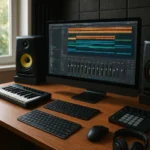
A Digital Audio Workstation (DAW) is software that turns your computer into a recording studio. It’s where you’ll arrange, record, and produce your song.
| DAW (Digital Audio Workstation) | Best For… | Our Take 🎤 |
|---|---|---|
|
Ableton Live |
Electronic music, live performance, creative experimentation. | The king of creative workflow. Its “Session View” is like a musical sketchpad, perfect for trying out ideas without committing to a timeline. |
|
Logic Pro X (Mac only) |
All-around songwriting, producing, and mixing. | Comes with a massive library of amazing virtual instruments and sounds right out of the box. An incredible value for Mac users. |
|
FL Studio |
Hip-hop, EDM, beat-making. | Famous for its lightning-fast pattern-based sequencer. If you’re a beatmaker, you probably already know and love it. |
|
PreSonus Studio One |
Traditional recording, fast workflow. | A fantastic, user-friendly option that combines the best of other DAWs into one intuitive package. |
👉 Shop for DAWs on:
- Ableton Live: Sweetwater | Guitar Center
- FL Studio: Sweetwater | Guitar Center
- PreSonus Studio One: Sweetwater | Guitar Center
Understanding Basic Music Theory: Your Secret Weapon 🎼
Okay, deep breaths. The words “music theory” can strike fear into the hearts of creative souls. But here’s the secret: you don’t need to be a Juilliard graduate to write a song.
Think of music theory not as a set of rigid rules, but as a map. It shows you the well-trodden paths that are proven to work. You can still go off-roading, but the map helps you understand where you are and where you might want to go next.
Three Concepts to Get You Started:
- The Key: This is the “home base” for your song. It’s a group of seven notes that sound good together. (e.g., the key of C Major uses the white keys on a piano).
- The Scale: This is just the notes of the key played in order. It’s the raw material for your melodies.
- Chords: These are groups of (usually) three or more notes played together. They create the harmony and emotional backdrop for your song. Most pop, rock, and folk songs are built on just three or four simple chords!
Don’t know where to start? Check out our Instrument Tutorials to learn the basics on your weapon of choice. The goal isn’t to become a theory expert overnight; it’s to learn just enough to empower your creativity.
The Songwriting Journey: Our 12-Step Blueprint to Crafting Your Masterpiece
You’re prepped. You’re inspired. You’re ready. Now, let’s build this thing. We’ve broken down our studio process into 12 manageable steps. Follow this blueprint, and you’ll have a finished song before you know it.
1. 🎯 Start with a Spark: Igniting Your Song’s Core Idea
Every song starts with a single point of origin. A “seed.” Your first job is to find that seed and plant it. It could be a melody, a chord progression, a beat, or a lyrical concept. There are no rules here!
1.1. Hook ‘Em Early: The Power of Your Song Title
One popular method, advocated by Robin Frederick at My Song Coach, is to start with the title. Why? Because a strong title acts as a thesis statement for your song. It gives you focus and a clear destination.
Think of titles like “I Will Always Love You” or “Smells Like Teen Spirit.” They immediately create a world of questions and emotions. A great title should be:
- Intriguing: It makes you want to know more.
- Memorable: It’s easy to say and recall.
- Central: It captures the core message of the song.
Try brainstorming 5-10 potential titles for your idea. Don’t filter yourself. Just write them down.
1.2. Brainstorming Brilliance: Unlocking Your Lyrical Ideas
Once you have a title or a core concept, it’s time to brainstorm. Frederick suggests making a list of questions suggested by the title. If your title is “Empty Coffee Cup,” you might ask:
- Who drank the coffee?
- Why is the cup empty?
- What conversation happened over this coffee?
- How do I feel looking at this empty cup? (Lonely? Relieved? Caffeinated?)
This isn’t your lyric yet. This is the raw material. It’s a mind map of all the places your song could go.
2. 🏗️ Structure Your Story: Choosing Your Song’s Blueprint
Now that you have a pile of ideas, you need a container to put them in. That container is your song structure. As the experts at Careers in Music put it, “A good song structure helps the listener follow along.” It creates familiarity and manages the listener’s expectations, making your song more impactful.
2.1. Demystifying Song Structures: Verse-Chorus, AABA, and Beyond!
Here are a few of the most common structures. Don’t worry, we’ll explain what each part means next!
| Structure | Layout | Famous Example | Best For… |
|---|---|---|---|
| Verse-Chorus | V-C-V-C-B-C | “Shake It Off” – Taylor Swift | Pop, Rock, Country. The most popular modern structure. |
| AABA | A-A-B-A | “Somewhere Over the Rainbow” – Judy Garland | Jazz, classic pop, showtunes. Great for simple, direct storytelling. |
| Verse-Refrain | V-R-V-R-B-R | “Blowin’ in the Wind” – Bob Dylan | Folk, story-songs. The refrain is a repeated line or two, less developed than a full chorus. |
| Strophic | V-V-V-V… | “Amazing Grace” – John Newton | Hymns, folk ballads. The music repeats for each verse of lyrics. |
Our advice? Start with Verse-Chorus. It’s popular for a reason, and learning its dynamics is a fundamental skill.
2.2. The Chorus: Your Song’s Unforgettable Anchor
The chorus is the main event. It’s the part of the song that gets stuck in your head.
- Lyrically: It contains the main message or title of your song. It’s the answer to the biggest question.
- Musically: It’s usually the highest energy point of the song, with a catchy, repeatable melody.
- Repetition: The lyrics and melody of the chorus are typically the same each time they appear.
2.3. Verses: Building Your Narrative Arc
If the chorus is the “what,” the verses are the “why” and “how.”
- Lyrically: Each verse tells a different part of the story, providing details, imagery, and context that lead the listener to the conclusion in the chorus.
- Musically: The melody in the verses is usually in a lower note range and less “shouty” than the chorus.
- Progression: The lyrics change from verse to verse, but the melody usually stays the same.
3. ✍️ Craft Your Lyrical Masterpiece: Words That Resonate
You have your ideas and your structure. Now it’s time to write the actual words. This is where many people freeze up. Don’t! Remember, it’s just a first draft.
3.1. Answering the Call: What Story Will Your Chorus Tell?
Look back at your brainstormed questions from Step 1. Pick the most important, central question. The answer to that question is your chorus.
- Tip: Try to include your song title in the first or last line of the chorus. This is a classic trick that makes your song incredibly catchy and easy to remember.
- Show, Don’t Tell: Instead of saying “I’m sad,” say “There’s a hole in my chest where the laughter used to be.” Use sensory details and metaphors to paint a picture.
3.2. Weaving the Narrative: Developing Your Verses
Now, assign your other brainstormed questions to your verses.
- Verse 1: Should set the scene. Who, what, where, when? Give the listener just enough information to understand what the chorus is about.
- Verse 2: Should escalate the story. It adds a new perspective, a complication, or a deeper layer of detail. It can’t just be a repeat of Verse 1 with different words.
Rhyme Scheme: Don’t get too hung up on perfect rhymes. As Splice’s guide points out, “Your song definitely doesn’t have to rhyme.” Prioritize the message. Near rhymes (like “home” and “alone”) or internal rhymes can often feel more natural and less like a nursery rhyme.
4. 🎶 Melody & Harmony: Bringing Your Words to Life
Words are only half the story. Now we need to make them sing! This is often the most intuitive part of the process. For more in-depth techniques, explore our articles on Melody Creation.
4.1. Finding the Melody in Your Lyric: Singing Your Story
Here’s a trick we love, also mentioned by My Song Coach:
- Take a line from your chorus lyric.
- Say it out loud, but with exaggerated emotion. Really feel it.
- Notice the natural up-and-down pitch of your voice. That’s a melody!
- Sing that natural rhythm and pitch. Refine it. Play with it. Record it on your phone immediately!
Your verse melody should feel different from your chorus melody. A common technique is to have the verse melody be more conversational and in a lower range, then have the chorus melody “lift” into a higher, more powerful range.
4.2. The Magic of Chords: Adding Emotion and Depth
Chords are the emotional foundation of your song. If you play an instrument, start experimenting.
- Don’t know any chords? No problem! Look up the chords for a simple song you love on a site like Ultimate Guitar. Many hits use the same 4 chords: G, C, D, and E minor. Learn those, and you can play thousands of songs.
- Find the Vibe: Try playing your chorus melody over a simple, repeating chord pattern. Does it feel happy (major chords)? Sad (minor chords)? Tense? Let the chords support the emotion of your lyric.
- Record Everything: As you experiment, keep your phone recording. You might stumble upon a magical combination of melody and chords, and you don’t want to lose it.
4.3. Crafting Catchy Hooks: Earworms That Stick!
A hook is a short, memorable musical or lyrical phrase. It’s the part of the song that grabs you. Your main chorus melody is a hook, but you can also have:
- Instrumental Hooks: The opening guitar riff of “Smoke on the Water.”
- Vocal Hooks: The “ella, ella, eh, eh, eh” in Rihanna’s “Umbrella.”
- Rhythmic Hooks: The iconic drum beat of “We Will Rock You.”
Listen for these in your own writing. What’s the most memorable little bit you’ve created? Lean into it! Repeat it. Make it a central feature.
5. 🧩 Develop Your Song in Sections: From Idea to Full Form
You’ve got the main building blocks. Now let’s assemble them into a complete song structure.
5.1. The First Verse: Setting the Scene
Your first verse is the listener’s entry point. Start with a line that grabs their attention. It could be an intriguing question, a vivid image, or a bold statement. Your goal is to give them just enough context to make the first chorus land with maximum impact.
5.2. Connecting Verse and Chorus: Smooth Transitions
The transition from verse to chorus is crucial. You can build energy with a pre-chorus—a short section that musically and lyrically lifts into the chorus. Or, you can use the last line of the verse to create a “ramp” that leads perfectly into the first line of the chorus.
5.3. The Second Verse & Bridge: Expanding Your World
- Second Verse: This is where you deepen the story. Don’t just repeat the ideas of the first verse. Introduce a new detail, a twist, or a change in perspective.
- The Bridge: This is your “aha!” moment. The bridge should feel different from the rest of the song. It often has new chords, a different melodic feel, and a lyrical shift. It’s the moment of realization or the emotional peak before you slam back into the final chorus.
5.4. The Outro: Leaving a Lasting Impression
How does your song end? Does it fade out on a repeating chorus? Does it end abruptly on a single chord? Does it introduce a new instrumental solo? The outro is your final chance to leave the listener with a feeling. Make it count.
6. ✨ Polishing Your Gem: Refining and Enhancing Your Song
You have a full draft. Congratulations! You’ve done more than 90% of aspiring songwriters. Now, it’s time to put on your editor’s hat. The team at Splice gives this critical advice: “Do not skip the editing stage.”
6.1. The Art of Self-Editing: Trimming the Fat, Adding the Sparkle
Take a day or two away from the song. Come back with fresh ears and ask yourself these ruthless questions:
- Is every single word necessary?
- Are there any clichés I can replace with something more original?
- Is the melody as strong as it can be?
- Does the song’s energy rise and fall in an interesting way?
- Is the emotional message clear?
Be prepared to “kill your darlings”—that one clever line or cool chord that you love, but that doesn’t actually serve the song. It’s tough, but it’s what separates the amateurs from the pros.
6.2. Seeking Feedback: Your Song’s First Audience
Play your song for a trusted friend, a fellow musician, or a mentor. Don’t ask “Do you like it?” That’s a useless question. Ask specific questions:
- “What do you think this song is about?” (Checks for clarity)
- “Which part was most memorable?” (Checks for hooks)
- “Was there any part where you got bored?” (Checks for pacing)
- “How did it make you feel?” (Checks for emotional impact)
Be open to the feedback. You don’t have to take every suggestion, but listen for patterns in what people are saying.
7. 🚧 Overcoming Creative Hurdles: Bouncing Back Stronger!
Every songwriter, from bedroom beginners to Grammy-winners, hits a wall. It’s part of the process. The key is knowing how to climb over it.
7.1. Battling Writer’s Block: Strategies That Work
- Change Your Environment: Take your guitar to a park. Go to a library. Write in a different room. A new setting can spark new ideas.
- Use a Prompt: Find a random word generator online. Or a picture. Force yourself to write a song about it, even if it’s silly. The goal is to get the creative gears turning again.
- Switch It Up: If you’re stuck on lyrics, work on the melody. If the chords are boring you, try writing a drum beat.
- Take a Break: Seriously. Go for a walk. Watch a movie. Live some life. Your subconscious will keep working on the problem.
7.2. Dealing with Self-Doubt: Trusting Your Artistic Voice
That little voice in your head that says “This is terrible” is a liar. Every creator has it. Acknowledge it, and then politely tell it to shut up. Remember what Careers in Music advises: “Don’t be afraid to be vulnerable.” Your unique perspective is your greatest asset. Your song doesn’t have to sound like anyone else’s. In fact, it’s better if it doesn’t.
8. 🎙️ Recording Your Song: From Demo to Masterpiece
Once your song is written and polished, it’s time to capture it. A recording turns your idea into a shareable piece of art. For a deep dive, check out our guides in the DIY Recording Studio section.
8.1. Home Studio Essentials: What You Really Need
You can get a professional-sounding recording at home with just a few key pieces of gear.
- Audio Interface: This is the bridge between your microphone/instrument and your computer. The Focusrite Scarlett 2i2 is the industry standard for a reason: it’s affordable, reliable, and sounds great.
- Microphone: A versatile large-diaphragm condenser mic is your best bet for vocals and acoustic instruments. The Audio-Technica AT2020 or Rode NT1 are fantastic starting points.
- Headphones: You need “closed-back” headphones for recording to prevent the sound from leaking into your microphone. The Sony MDR-7506 are a studio classic.
- DAW: The software we mentioned earlier (Ableton, Logic, etc.).
👉 Shop for Recording Gear:
- Focusrite Scarlett 2i2: Sweetwater | Guitar Center | Amazon
- Audio-Technica AT2020: Sweetwater | Guitar Center | Amazon
- Sony MDR-7506: Sweetwater | Guitar Center | Amazon
8.2. Professional Production: When to Call in the Experts
A great home recording can take you far. But sometimes, to get that radio-ready polish, you need a professional producer or mixing engineer. Here at Make a Song™, this is our specialty! A pro can help with arrangement, sound selection, and the technical arts of mixing and mastering to make your song truly shine.
9. 🤝 Collaborating with Other Musicians: Two Heads Are Better Than One
Songwriting doesn’t have to be a solo sport. Some of the greatest songs in history were written by duos: Lennon/McCartney, Elton John/Bernie Taupin, Billie Eilish/Finneas.
I’ll never forget a session with our guitarist, Lena. I had a verse and chorus I loved, but the song just hit a dead end. I was ready to scrap it. Lena listened, picked up her guitar, and played a chord progression I would have never thought of. It completely changed the mood of the song and instantly unlocked the bridge. We finished the song in an hour.
Benefits of Collaboration:
- Fills in your skill gaps (e.g., a lyricist working with a melody expert).
- Breaks you out of your creative ruts.
- Provides instant feedback and motivation.
- It’s just more fun!
10. 🛡️ Protecting Your Creation: Copyright Essentials for Songwriters
This is the “eat your vegetables” part of songwriting, but it’s incredibly important. You’ve created something valuable; you need to protect it. For more on this, see our Music Industry Insights.
- What is a Copyright? It’s the legal ownership of your intellectual property. A song actually has two copyrights:
- The Composition (©): The underlying melody and lyrics. This is owned by the songwriter(s).
- The Sound Recording (℗): The specific recording of that song. This is often owned by the artist or record label.
- How to Protect It: As soon as you record your song or write it down, you have a common-law copyright. But for real legal power, you must register your song with the U.S. Copyright Office. It’s a simple online process.
- PROs: Join a Performing Rights Organization like ASCAP or BMI. They collect royalties for you whenever your song is played on the radio, on TV, in a restaurant, etc.
11. 🌐 Sharing Your Sound: Getting Your Music Heard
A song isn’t truly finished until someone hears it. In the digital age, you have a global stage at your fingertips.
11.1. Digital Distribution: Spreading Your Wings Online
Services called digital distributors will take your finished song and send it to all the major streaming platforms (Spotify, Apple Music, etc.) for a small fee or a percentage of royalties.
- DistroKid: Known for its simple, yearly flat-fee model and fast uploads.
- TuneCore: A long-standing, reliable option with more detailed analytics.
- CD Baby: Offers distribution as well as other artist services.
11.2. Building Your Artist Brand: More Than Just Music
What’s your story? What’s your visual aesthetic? Your brand is how you connect with fans on a deeper level. Use social media platforms like Instagram, TikTok, and YouTube to share your music, your process, and your personality.
11.3. Live Performance: Connecting with Your Audience
There is no substitute for the energy of a live performance. Start at local open mic nights. It’s a fantastic way to test out new material, conquer stage fright, and connect with other musicians and potential fans in your community.
12. 📈 Continuous Growth: The Lifelong Journey of a Songwriter
Your first song is a huge milestone. Your tenth will be better. Your hundredth will be even better than that. As the Splice team wisely puts it, “If you never get comfortable finishing your less-than-great songs, how will you ever know how to finish the ones worth producing and recording?”
Embrace the journey. Study your favorite artists. Learn a new instrument. Read poetry. The more you feed your creative mind, the more your songwriting will flourish.
Genre Spotlight: Tailoring Your Songwriting Approach 🎸
While our 12 steps are universal, great songwriters know how to tailor their approach to fit the conventions—and expectations—of their chosen genre.
| Genre | Lyrical Focus | Common Structures | Production Notes |
|---|---|---|---|
| Pop 🎤 | Universal themes of love, heartbreak, partying, empowerment. Lyrics are often direct, concise, and highly repetitive. | Verse-Chorus-Bridge is king. Heavy emphasis on the pre-chorus to build anticipation for the massive, catchy chorus. | Polished, clean, and modern. Features electronic drums, synths, and heavily processed vocals. The hook is everything. |
| Hip-Hop 🎤 | Storytelling, social commentary, bravado, personal history. Intricate rhyme schemes, wordplay, and rhythmic flow are paramount. | Often loop-based. Can use traditional structures, but also skits, ad-libs, and beat switches. The beat is the foundation. | Sample-heavy or built around a signature 808 drum machine sound. The vocal performance and delivery are central. |
| Rock 🤘 | Rebellion, angst, social issues, epic stories. Can range from raw and direct to poetic and abstract. | Verse-Chorus is common, but often with more instrumental sections like guitar solos and dynamic shifts. | Driven by live instruments: electric guitar, bass, and acoustic drums. The energy and “feel” of the band are key. |
| Folk/Acoustic 🎻 | Narrative storytelling, personal introspection, political protest. Lyrics are often dense and poetic. Authenticity is crucial. | Strophic (V-V-V) or Verse-Refrain structures are common, putting the focus squarely on the story being told. | Raw, organic, and minimalist. Often just an acoustic guitar and voice. The performance should feel intimate and honest. |
Recommended Resources for Aspiring Songwriters 📚
Ready to go even deeper? Here are some of the books, websites, and tools our team at Make a Song™ constantly recommends to up-and-coming artists.
Must-Read Books:
- “Writing Better Lyrics” by Pat Pattison: The bible of lyric writing. Pattison is a professor at Berklee College of Music, and his techniques for using sensory details and object writing are game-changers.
- “The War of Art” by Steven Pressfield: Not a songwriting book, but a book about creativity itself. It will give you the kick in the pants you need to overcome “The Resistance” (his term for self-doubt and procrastination).
- “Steal Like an Artist” by Austin Kleon: A short, inspiring read about how all creativity is built on what came before. It will free you from the pressure of having to be 100% original.
Helpful Websites & Apps:
- RhymeZone: The best online rhyming dictionary, period. It also includes near rhymes, synonyms, and more.
- Hooktheory: An incredible resource for analyzing the chords and melodies of popular songs. A fantastic way to learn theory in a practical way.
- Ultimate Guitar: The go-to place for chords and tabs for millions of songs. Perfect for learning how your favorite tracks are constructed.
- Splice: A massive library of royalty-free samples, loops, and presets. An amazing tool for producers looking for new sounds and inspiration.
Conclusion: Your Songwriting Journey Begins Now! 🎉
Congratulations! You’ve just unlocked the ultimate roadmap to writing your own song—from that first spark of inspiration all the way to sharing your masterpiece with the world. Remember, songwriting is both an art and a craft. It’s about telling your unique story with honesty, emotion, and creativity, while also mastering the tools and techniques that make your song resonate.
We started by teasing the mystery of where songs come from and how inspiration can strike anywhere. Now you know how to capture that inspiration, structure your song, craft compelling lyrics, and compose melodies and harmonies that bring your story to life. You’ve learned how to polish your work, overcome creative blocks, and even protect your creation legally.
If you ever doubted whether you could write a song, know this: every songwriter starts somewhere, and every song is a step forward. The more you practice, the stronger your creative muscles become. So grab your instrument, notebook, or DAW, and start making magic.
And if you’re wondering how to keep improving, remember: the journey never ends. Keep listening, keep experimenting, and keep sharing. Your next great song is just around the corner.
Ready to take the next step? Dive into our DIY Recording Studio guides or explore Melody Creation to level up your craft.
Recommended Links
Gear & Software:
-
Focusrite Scarlett 2i2 Audio Interface:
Sweetwater | Guitar Center | Amazon -
Audio-Technica AT2020 Microphone:
Sweetwater | Guitar Center | Amazon -
Sony MDR-7506 Headphones:
Sweetwater | Guitar Center | Amazon -
Ableton Live DAW:
Sweetwater | Guitar Center -
FL Studio DAW:
Sweetwater | Guitar Center -
PreSonus Studio One DAW:
Sweetwater | Guitar Center
Books:
-
Writing Better Lyrics by Pat Pattison:
Amazon -
The War of Art by Steven Pressfield:
Amazon -
Steal Like an Artist by Austin Kleon:
Amazon
FAQ: Your Burning Songwriting Questions Answered 🔥
How do I come up with a catchy melody for my song?
Crafting a catchy melody starts with listening to the natural rhythm and pitch of your lyrics. Speak or sing your words with exaggerated emotion and notice the ups and downs in your voice—that’s your raw melody. Experiment by repeating and varying this melody, aiming for simplicity and memorability. Hooks often use repetition and a limited note range to make them stick in listeners’ heads. Remember, the chorus melody usually sits in a higher pitch range than the verses to create emotional lift. For more tips, check out our Melody Creation articles.
What are the essential elements of a song structure that I should follow?
The most effective song structures balance familiarity and surprise to keep listeners engaged. The classic Verse-Chorus-Verse-Chorus-Bridge-Chorus format is a proven blueprint because it:
- Introduces a story or theme in the verses.
- Delivers the main message and emotional payoff in the chorus.
- Adds contrast and depth with the bridge.
You can add a pre-chorus to build anticipation or experiment with other forms like AABA or strophic structures depending on your genre. The key is to make sure each section has a distinct melody and purpose. Learn more about structures in our Instrument Tutorials.
How can I write meaningful and engaging lyrics for my song?
Meaningful lyrics come from authenticity and vivid imagery. Start by brainstorming questions and emotions related to your song’s title or theme. Use sensory details—what you see, hear, smell, taste, and feel—to paint pictures instead of just stating facts. Avoid clichés by finding unique angles or metaphors. Also, don’t stress about perfect rhymes; near rhymes and free verse can feel more natural and expressive. Sharing your personal truth, even if it’s vulnerable, connects deeply with listeners. Our Lyric Inspiration section is packed with exercises to get you started.
What are some tips for creating a memorable and effective chorus in my song?
Your chorus is the emotional and melodic anchor of your song. To make it memorable:
- Include your song title or main phrase early or at the end.
- Keep the melody simple, repetitive, and singable.
- Use higher pitch and dynamic energy compared to verses.
- Make the lyrics universal enough for listeners to relate but specific enough to feel personal.
- Consider a rhythmic hook or a catchy instrumental riff to complement the vocals.
Don’t be afraid to repeat the chorus multiple times; repetition is your friend here! For more on hooks and choruses, visit our Melody Creation resources.
How do I overcome writer’s block when songwriting?
Writer’s block is a universal hurdle. Our top strategies include:
- Changing your environment to stimulate fresh ideas.
- Using prompts or random words to force creativity.
- Switching focus between lyrics, melody, and chords to keep momentum.
- Taking breaks to recharge your subconscious.
- Collaborating with others to bring new perspectives.
Remember, sometimes the best ideas come when you stop trying so hard. For more inspiration, see our Music Industry Insights articles.
What gear do I really need to start recording my songs at home?
You don’t need a fancy studio to start recording. The essentials are:
- An audio interface like the Focusrite Scarlett 2i2 to connect your instruments and mic to your computer.
- A quality microphone such as the Audio-Technica AT2020 for vocals and acoustic instruments.
- Closed-back headphones like the Sony MDR-7506 to monitor your recordings without bleed.
- A Digital Audio Workstation (DAW) such as Ableton Live, FL Studio, or PreSonus Studio One.
With these, you can capture demos that sound professional and give you a solid foundation for production. Explore our DIY Recording Studio guides for detailed setup tips.
Reference Links
- How to Write a Song: Make a Song in 7 Steps – Blog | Splice
- My Song Coach – Write a Song in Ten Steps
- Careers in Music – How to Write a Song
- U.S. Copyright Office – Registration
- ASCAP – Performing Rights Organization
- BMI – Performing Rights Organization
- Focusrite Official Website
- Audio-Technica Official Website
- Sony Professional Headphones
- Ableton Live Official Site
- FL Studio Official Site
- PreSonus Studio One Official Site
We hope this guide lights your way to songwriting success. Now, go make a song that only you can make! 🎵✨