Support our educational content for free when you buy through links on our site. Learn more

🎵 Create Your Own Song Online: The Ultimate 2026 Guide (10 Steps)

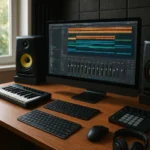
You can absolutely create your own song online right now, for free, and have it sound professional enough for Spotify without ever touching a physical mixing console. The barrier to entry has crumbled, allowing anyone with a browser to access studio-grade tools that were once reserved for million-dollar facilities.
Forget the myth that you need expensive hardware to make a hit; the cloud has democratized music production in a way we never imagined a decade ago. Just last week, a producer in a tiny apartment in Berlin collaborated in real-time with a drummer in Tokyo to finish a track that’s now climbing the charts, all through a simple web link.
The secret isn’t better gear; it’s better access. Platforms like Soundtrap and BandLab have turned the internet into a global recording studio where latency is managed, loops are royalty-free, and collaboration happens instantly.
Whether you’re a complete novice or a seasoned musician looking for a portable workflow, the tools to create your own song online are already open and waiting for you.
Key Takeaways
-
Zero Hardware Required: You can create your own song online using just a browser, a microphone, and a stable internet connection.
-
Real-Time Collaboration: Modern cloud DAWs allow you to jam with musicians globally, syncing audio and video instantly.
-
Professional Quality: Built-in mastering tools and royalty-free libraries ensure your tracks meet streaming platform standards.
-
Free to Start: Platforms like BandLab and Audiotool offer robust free tiers, while premium options like Soundtrap unlock advanced features.
-
👉 Shop Top Online Music Makers:
Soundtrap: Official Website | Amazon
BandLab: Official Website
Audiotool: Official Website
Table of Contents
- ⚡️ Quick Tips and Facts
- 🎹 The Evolution of the Digital Audio Workstation: From Bedroom to Browser
- 🚀 10 Essential Steps to Create Your Own Song Online from Scratch
- 1. Choosing the Right Cloud-Based DAW for Your Workflow
- 2. Setting Up Your Virtual Studio Environment
- 3. Laying Down the Foundation with Drum Patterns and Lops
- 4. Crafting Melodies with Virtual Instruments and Synths
- 5. Recording Vocals and Live Instruments Remotely
- 6. Arranging Your Track for Maximum Impact
- 7. Applying Vocal Tuning and Pitch Correction
- 8. Mixing Your Song: Balancing Levels and EQ
- 9. Mastering Your Track for Streaming Platforms
- 10. Exporting and Sharing Your Masterpiece
- 🎛️ Top Browser-Based Music Makers Compared: Soundtrap vs. BandLab vs. Audiotool
- 🤝 How to Collaborate with Musicians Globally in Real-Time
- 🎚️ Advanced Mixing and Mastering Techniques for Online Producers
- 🎵 Accessing Royalty-Free Lops, Samples, and Sound Packs
- 🎤 Vocal Production Hacks: From Raw Takes to Radio-Ready Hooks
- 🔄 Remixing 101: How to Reimagine Existing Tracks Legally
- 💡 Common Pitfalls When Creating Music in the Cloud and How to Avoid Them
- 📱 Mobile vs. Desktop: Where Should You Create Your Next Hit?
- 🎓 Learning Resources: Tutorials, Courses, and Communities for Online Songwriters
- 🏆 Conclusion
- 🔗 Recommended Links
- ❓ FAQ
- 📚 Reference Links
⚡️ Quick Tips and Facts
Before you dive headfirst into the digital abyss of beat-making, let’s hit the pause button and drop some knowledge that could save you hours of frustration. We’ve seen too many aspiring producers burn out because they tried to build a skyscraper on a foundation of sand. Here’s the tea on creating your own song online:
- Browser-Based is King (for now): You don’t need a $3,0 computer to start. Modern browsers like Chrome and Edge are powerful enough to run full Digital Audio Workstations (DAWs) directly in the cloud.
- The “URL Save” Trick: Some platforms, like BepBox, save your entire song in the browser’s address bar. No login? No problem. Just copy the URL, and your masterpiece is yours forever.
- Latency is the Enemy: If you are recording live vocals or guitar, a wired Ethernet connection is your best friend. Wi-Fi can introduce audio lag that makes singing in time feel like trying to catch a greased pig.
- Royalty-Free is Non-Negotiable: Always check the license. Just because a loop is free doesn’t mean you can sell the song you made with it. We’ll cover this in depth later.
- Collaboration is Real-Time: You aren’t just emailing WAV files back and forth anymore. You can jam with a drummer in Tokyo while you’re in your bedroom in Ohio, all within the same session.
If you’re wondering where to start your journey, check out our deep dive on the best song maker online tools to get the ball rolling.
🎹 The Evolution of the Digital Audio Workstation: From Bedroom to Browser
Remember the days when making a song meant renting a studio by the hour, fighting with analog tape, and hoping the engineer didn’t hate you? Those days are fading fast. The Digital Audio Workstation (DAW) has evolved from a niche software for computer nerds to a ubiquitous tool accessible to anyone with a Wi-Fi connection.
The Shift from Hardware to Cloud
In the early 20s, if you wanted to make a beat, you needed a sampler, a sequencer, and a mixing console. Today, the “studio” is a tab in your browser. This shift has democratized music production, allowing bedroom producers to compete with major label artists.
- The Old Way: Buy hardware, install drivers, manage file versions, risk data loss.
- The New Way: Log in, start creating, auto-save enabled, collaborate instantly.
This evolution isn’t just about convenience; it’s about accessibility. Platforms like Soundtrap (owned by Spotify) and BandLab have lowered the barrier to entry so significantly that the only thing stopping you from creating your own song online is your imagination.
“The best instrument is the one you have with you.” — Anonymous Producer
But does “free” mean “low quality”? Not necessarily. As we’ll see, the line between professional software and browser-based tools is blurring faster than a bad mix on a cheap speaker.
🚀 10 Essential Steps to Create Your Own Song Online from Scratch
Ready to stop dreaming and start making? Here is our battle-tested roadmap to going from zero to a finished track. We’ve broken this down into 10 actionable steps that apply whether you’re using a complex DAW or a simple loop station.
1. Choosing the Right Cloud-Based DAW for Your Workflow
Not all online studios are created equal. Some are built for beat-makers, others for vocalists, and some for total beginners.
- For Beat Makers: Look for robust pattern sequencers and drum machines.
- For Vocalists: Prioritize low-latency recording and built-in pitch correction.
- For Collaborators: Ensure the platform has real-time video chat and shared project folders.
2. Setting Up Your Virtual Studio Environment
Before you hit record, get your house in order.
- Audio Interface: Connect your microphone or guitar via USB.
- Headphones: Use closed-back headphones to prevent bleed into the mic.
- Browser Settings: Disable notifications and close unnecessary tabs to free up RAM.
3. Laying Down the Foundation with Drum Patterns and Lops
Every great song needs a heartbeat. Start with a drum loop or program a simple kick-snare pattern.
- Tip: Don’t overcomplicate it. A solid four-on-the-floor kick can carry a whole track.
- LSI Keyword: Drum programming basics.
4. Crafting Melodies with Virtual Instruments and Synths
Now, add the magic. Use MIDI keyboards or the on-screen piano roll to lay down chords and leads.
- Synth Selection: Choose a sound that fits the mood. Is it a dreamy pad or a gritty bass?
- LSI Keyword: Virtual instrument libraries.
5. Recording Vocals and Live Instruments Remotely
This is where the soul comes in.
- Mic Placement: Keep the mic 6-8 inches from your mouth.
- Gain Staging: Ensure your levels are peaking around -12dB to avoid clipping.
- LSI Keyword: Remote recording techniques.
6. Arranging Your Track for Maximum Impact
A song isn’t just a loop; it needs a journey. Structure your track with an Intro, Verse, Chorus, Bridge, and Outro.
- Dynamics: Build tension by adding layers in the chorus and stripping them back in the verse.
- LSI Keyword: Song structure arrangement.
7. Applying Vocal Tuning and Pitch Correction
Don’t be afraid to use tools like Auto-Tune or Melodyne. They aren’t just for fixing mistakes; they are creative effects.
- Natural vs. Robotic: Adjust the “retune speed” to get the desired effect.
- LSI Keyword: Vocal pitch correction.
8. Mixing Your Song: Balancing Levels and EQ
This is the art of making everything fit together.
- EQ: Cut the mud (low frequencies) from non-bass instruments.
- Compression: Control the dynamic range so quiet parts are heard and loud parts don’t hurt.
- LSI Keyword: Online mixing techniques.
9. Mastering Your Track for Streaming Platforms
The final polish. Mastering ensures your song sounds good on Spotify, Apple Music, and YouTube.
- Loudness Standards: Aim for -14 LUFS for streaming platforms.
- LSI Keyword: Online mastering services.
10. Exporting and Sharing Your Masterpiece
Render your track as a high-quality WAV or MP3 file.
- Metadata: Tag your song with the title, artist, and genre before uploading.
- LSI Keyword: Exporting music files.
🎛️ Top Browser-Based Music Makers Compared: Soundtrap vs. BandLab vs. Audiotool
We’ve tested them all, and the results might surprise you. It’s not just about features; it’s about how the tool fels in your hands.
Comparison Table: The Big Three
| Feature | Soundtrap | BandLab | Audiotool |
|---|---|---|---|
| Best For | Collaboration & Education | Social Networking & Free Tools | Modular Synthesis & Sound Design |
| Learning Curve | Low (Beginer Friendly) | Low to Medium | High (Step) |
| Collaboration | Real-time Video & Chat | Social Feed & Project Sharing | Limited (File sharing) |
| Sound Library | 24,0+ Lops (Spotify Quality) | Massive Community Library | User-Generated Modules |
| Mobile App | Excellent | Excellent | Good |
| Pricing Model | Freemium (Paid for Pro features) | 10% Free | Free (Donations) |
| Latency | Low (Cloud optimized) | Low | Variable (Browser dependent) |
Deep Dive: Soundtrap
Soundtrap is the polished, professional choice. Owned by Spotify, it feels like a premium product.
- Pros: Incredible sound library, seamless collaboration, and “Auto-Mix” features that help beginners sound pro.
- Cons: Many advanced features (like Vocal Tuning) are locked behind a paywall.
- Verdict: Perfect for educators, bands, and serious hobbyists who want a “chart-ready” workflow.
Deep Dive: BandLab
BandLab is the social network of music. It’s completely free and packed with features.
- Pros: No cost, massive community, built-in social features to share your tracks.
- Cons: The interface can feel cluttered; sound quality varies depending on the user-uploaded samples.
- Verdict: The best choice for beginners on a budget who want to connect with other musicians.
Deep Dive: Audiotool
Audiotool is for the tinkers. It simulates real hardware rack units.
- Pros: Unmatched sound design capabilities, completely free, modular workflow.
- Cons: Step learning curve, not great for recording live vocals, interface can be overwhelming.
- Verdict: Ideal for electronic music producers who love tweaking knobs and designing their own sounds.
👉 CHECK PRICE on:
- Soundtrap: Amazon | Official Site
- BandLab: Official Site (Free)
- Audiotool: Official Site (Free)
🤝 How to Collaborate with Musicians Globally in Real-Time
One of the most exciting aspects of creating your own song online is the ability to collaborate without borders. Imagine a guitarist in London laying down a solo while you add vocals in New York.
The Mechanics of Real-Time Jaming
Platforms like Soundtrap and BandLab use cloud synchronization to keep everyone in sync.
- Invite: Send a link to your collaborator.
- Connect: Join the session via the built-in video chat.
- Jam: Record your parts. The system handles the timing, ensuring your guitar and vocals line up perfectly.
Overcoming the “Latency Lag”
Even with the best tech, there’s a slight delay.
- Strategy: Record your parts separately. Don’t try to play with the other person in real-time if the lag is noticeable. Instead, play to a click track and the other person’s recorded part.
- Pro Tip: Use ASIO drivers on Windows to minimize buffer size and reduce latency.
🎚️ Advanced Mixing and Mastering Techniques for Online Producers
You’ve got your tracks recorded. Now, how do you make them sound like they belong on the radio?
Mixing: The Art of Balance
Mixing is about making sure every instrument has its own space in the frequency spectrum.
- EQ (Equalization): Cut the low end of your guitars so the bass and kick drum can breathe.
- Panning: Place instruments left and right to create a wide stereo image.
- Compression: Use it to glue the mix together. A bus compressor on your drum bus can make the whole kit punch harder.
Mastering: The Final Polish
Mastering is the last step before distribution.
- Limiting: Increase the overall volume without clipping.
- Stereo Imaging: Widen the high frequencies for a more immersive sound.
- Reference Tracks: Compare your mix to a professional song in the same genre.
Did you know? A good mix can sound great on a phone speaker, but a bad mix will sound terrible even on a $10,0 system.
🎵 Accessing Royalty-Free Lops, Samples, and Sound Packs
Let’s talk about the elephant in the room: Copyright. You can’t just download a sample from YouTube and use it in your song. You need royalty-free sounds.
Where to Find Safe Sounds
- Built-in Libraries: Soundtrap and BandLab offer thousands of loops that are cleared for use.
- Splice: A subscription service with millions of high-quality samples.
- Cymatics: Great for electronic music producers, offering free and paid packs.
Understanding Licenses
- Royalty-Free: You pay once (or get it free) and can use it forever without paying royalties.
- Creative Commons: Some sounds are free but require attribution (giving credit to the creator).
- Exclusive: You buy the rights to a sample, and no one else can use it.
Always read the Terms of Service before you drop that snare hit!
🎤 Vocal Production Hacks: From Raw Takes to Radio-Ready Hooks
Your voice is your most powerful instrument. Here’s how to make it shine in the digital realm.
Recording Tips
- The “Pop” Filter: Even a cheap pop filter makes a huge difference in reducing plosive sounds (P’s and B’s).
- Room Treatment: Hang blankets on the walls to reduce echo. A dead room sounds better than a live room with no treatment.
Processing Chain
- EQ: Cut the rumble below 80Hz.
- De-Esser: Tame harsh “S” sounds.
- Compression: Smooth out the dynamics.
- Reverb/Delay: Add space and depth.
Vocal Tuning
Don’t be shy with pitch correction. Set the retune speed to “fast” for that modern, robotic effect, or “slow” for a natural correction.
🔄 Remixing 101: How to Reimagine Existing Tracks Legally
Want to put your own spin on a hit song? That’s a remix. But be careful: you need permission.
The Legal Route
- Contact the Label: Reach out to the record label for a remix license.
- Stem Downloads: Some artists release “stems” (individual tracks) for fans to remix.
- Creative Commons: Look for songs released under CC licenses that allow derivatives.
The Creative Process
- Change the Tempo: Speed it up for a dance track or slow it down for a chill vibe.
- New Arrangement: Keep the vocals but change the chords and drums.
- Genre Swap: Turn a pop song into a techno track.
💡 Common Pitfalls When Creating Music in the Cloud and How to Avoid Them
Even the best tools have their traps. Here’s what to watch out for.
1. Browser Crashes
Browsers can be unstable.
- Fix: Save your work frequently. Use a browser with auto-save features like Soundtrap.
2. Latency Issues
- Fix: Use a wired connection and close other apps.
3. File Management
- Fix: Name your tracks clearly (e.g., “Vox_Lead_Take1”). Don’t rely on default names like “Audio1”.
4. Over-Reliance on Lops
- Fix: Use loops as a starting point, but try to record your own melodies and drums to make the song unique.
📱 Mobile vs. Desktop: Where Should You Create Your Next Hit?
Can you make a hit song on your phone? Absolutely. But is it the best tool for the job?
Mobile Pros & Cons
- Pros: Portability, instant inspiration, touch interface.
- Cons: Small screen, limited processing power, difficult for detailed mixing.
Desktop Pros & Cons
- Pros: Full keyboard/mouse control, better audio interface support, more screen real estate.
- Cons: Less portable, requires setup.
Our Verdict: Use your phone to capture ideas and sketch melodies. Move to your desktop (or laptop) for arranging, mixing, and mastering.
🎓 Learning Resources: Tutorials, Courses, and Communities for Online Songwriters
You don’t have to learn everything alone. The internet is full of resources.
Top Platforms for Learning
- YouTube: Channels like In The Mix and Andrew Huang offer free, high-quality tutorials.
- Skillshare: Paid courses on specific production techniques.
- Community Forums: Join the BandLab or Soundtrap communities to ask questions and get feedback.
Internal Resources
For more inspiration, check out our articles on:
- Lyric Inspiration to get those words flowing.
- DIY Recording Studio for setup tips.
- Copyright and Licensing to stay legal.
- Melody Creation to craft catchy hooks.
- Instrument Tutorials to master your gear.
🎥 Featured Video: Creating Music for Free with Audiotool
If you’re looking for a visual guide, check out this perspective on using Audiotool. The video demonstrates how to create a full track from scratch using only free browser-based tools.
The presenter walks through creating a new project, adding samples like drums and loops, and arranging them in the timeline. They also show how to connect different virtual devices and apply effects like phasers and reverbs. It’s a fantastic demonstration of the creative potential available to anyone with an internet connection.
Make It Yourself or Use a Guided Greeting?
Follow the creation steps in this article when learning, arranging, and editing the song is part of the goal. If the real objective is a personal surprise for someone else, Singagram offers a shorter guided path: provide the occasion and story details, choose a tone and animal singer, and receive a custom audio greeting or animated performance.
The better choice depends on whether you want creative control over the music-making process or a recipient-ready greeting.
🏆 Conclusion

So, there you have it. The barrier to entry for creating your own song online has never been lower. Whether you choose the polished, collaborative environment of Soundtrap, the social, free-for-all of BandLab, or the modular deep-dive of Audiotool, the tools are in your hands.
We started this journey by asking if you could really make a professional-sounding song without a studio. The answer is a resounding yes. The only thing that separates a hit record from a demo is the skill of the producer, and that skill is something you can learn right now, in your browser.
Don’t let the fear of technology stop you. Start with a simple loop, add a melody, record a vocal, and share it with the world. Your next hit is just a click away.
🔗 Recommended Links
Ready to get started? Here are the tools we recommend for your journey:
- Soundtrap: Shop Soundtrap on Amazon | Official Website
- BandLab: Official Website
- Audiotool: Official Website
- Splice: Shop Splice on Amazon | Official Website
- Books:
- The Mixing Engineer’s Handbook on Amazon
- Music Theory for Computer Musicians on Amazon
❓ FAQ

How to make a song from scratch online for free?
You can make a song from scratch for free by using platforms like BandLab or Audiotool. These platforms offer free access to virtual instruments, loops, and recording tools. Simply sign up, create a new project, and start arranging your sounds. You can record vocals using your computer’s microphone or a connected USB mic.
Read more about “🎹 Google Song Maker: The Ultimate 2026 Guide to AI & Grid Music”
What is the best AI tool to create your own song?
While AI tools like Soundraw and AIVA can generate music, the “best” tool depends on your needs. For full creative control, Soundtrap and BandLab offer AI-assisted features like auto-mixing and melody generation, but they still require human input for the best results. AI is great for inspiration, but you are the artist.
Read more about “🎵 Developing a Unique Song Structure: 7 Secrets to Break the Mold (2026)”
Can I write lyrics and compose music online together?
Yes! Many online DAWs, such as Soundtrap, allow you to write lyrics in a dedicated text editor while composing music. You can even sync your lyrics to the beat in real-time. This integrated workflow makes it easy to see how your words fit with the melody.
Read more about “🎵 15 Best Free Online Song Makers to Create Hits in 2026”
How do I record and mix my own song using a browser?
To record and mix in a browser:
- Connect your audio interface to your computer.
- Open your DAW (e.g., Soundtrap, BandLab).
- Create a new track and select your input source.
- Hit record and perform your part.
- Use the built-in mixer to adjust levels, EQ, and effects.
- Export your final mix as a WAV or MP3 file.
Read more about “15 Best Beat Maker Online Tools to Create Hits in 2026 🎧”
📚 Reference Links
- Soundtrap: Soundtrap Official Site
- BandLab: BandLab Official Site
- Audiotool: Audiotool Official Site
- Splice: Splice Official Site
- BepBox: BepBox Online Tool
- Music Theory: MusicTheory.net
- Audio Engineering Society: AES Official Site