Support our educational content for free when you buy through links on our site. Learn more

How Can I Come Up with a Song? 12 Proven Ways to Spark Your Creativity 🎵

Ever sat staring at a blank page or a silent guitar, wondering, “How can I come up with a song that actually sounds good?” You’re not alone! Songwriting can feel like chasing a lightning bolt in a thunderstorm—elusive, unpredictable, and sometimes downright frustrating. But here’s a little secret from the pros at Make a Song™: every hit song starts with a simple idea, and you can learn how to find yours.
In this comprehensive guide, we’ll unravel the mysteries of songwriting—from where to find inspiration (hint: it’s often hiding in plain sight) to mastering catchy hooks and overcoming dreaded writer’s block. Plus, we’ll share insider tips on using technology, collaborating with others, and protecting your creations from the growing wave of AI-generated music and scammers. Curious about how Alan Parsons’ warning about “unscrupulous scammers” ties into your songwriting journey? Stick around—you’ll find out soon!
Key Takeaways
- Inspiration is everywhere: Use everyday moments, objects, and emotions to spark ideas.
- No one “right” way: Whether you start with lyrics or melody, the key is to start somewhere.
- Structure matters: Understanding song architecture helps your ideas flow and stick.
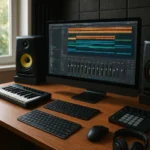
- Technology is your friend: DAWs like Ableton Live and tools like Focusrite interfaces can elevate your demos.
- Collaboration unlocks creativity: Partnering with other writers or producers can bring fresh perspectives.
- Protect your work: Register copyrights and join PROs to safeguard your songs from theft.
- Marketing is essential: Getting your song heard requires smart use of social media, playlists, and fan engagement.
Ready to turn your thoughts into tunes? Let’s dive in and make some music magic!
Table of Contents
- ⚡️ Quick Tips and Facts About Songwriting
- 🎶 The Art and Science of Crafting a Song: A Creative Background
- 1. Finding Your Inspiration: Where Do Song Ideas Come From?
- 2. Lyrics First or Melody First? Approaches to Songwriting
- 3. Building Blocks: Understanding Song Structure and Chord Progressions
- 4. Writing Catchy Hooks and Memorable Choruses
- 5. Using Rhyme, Rhythm, and Wordplay to Enhance Your Song
- 6. Collaborating with Others: Co-Writing and Producer Partnerships
- 7. Overcoming Writer’s Block: Tips and Tricks to Keep the Creativity Flowing
- 8. Recording Your Song: From Demo to Final Production
- 9. Using Technology and Software to Boost Your Songwriting Process
- 10. Analyzing Popular Songs: What Makes a Hit?
- 11. Legal Basics: Copyright, Publishing, and Protecting Your Song
- 12. Marketing Your Song: Getting Heard in a Crowded Music World
- Conclusion: Your Songwriting Journey Starts Here
- Recommended Links for Songwriters
- FAQ: Your Burning Questions About Songwriting Answered
- Reference Links and Resources
⚡️ Quick Tips and Facts About Songwriting
Before we dive into the deep end of the melodic pool, let’s look at some fast facts to get your gears turning. At Make a Song™, we’ve seen everything from bathroom-hummed hits to multi-million dollar studio productions.
| Fact/Tip | Description |
|---|---|
| The 1% Rule | Most professional songwriters write 100 songs to find 1 “hit.” Don’t be afraid of “bad” ideas! |
| Voice Memos | Your phone is your best friend. 90% of modern hits start as a grainy voice memo. |
| Song Length | The average radio hit is between 3:00 and 3:30 minutes. |
| Structure | The most common structure is Verse-Chorus-Verse-Chorus-Bridge-Chorus. |
| Human Touch | As legend Alan Parsons notes, AI might be efficient, but it lacks a “conscience” and human soul. |
✅ Do: Keep a notebook or app ready at all times.
❌ Don’t: Wait for “perfection” before finishing a draft.
🎶 The Art and Science of Crafting a Song: A Creative Background
Songwriting isn’t just about waiting for a lightning bolt to strike your guitar strings. It’s a craft that has evolved from ancient oral traditions to the digital age of DAWs (Digital Audio Workstations). Historically, songs were the newspapers of the people—telling stories of heartbreak, war, and triumph.
Today, the barrier to entry has vanished. You don’t need a record label; you just need an idea and the right tools. However, with the rise of AI-generated tracks, the industry is facing a crisis of authenticity. We agree with the sentiment that while software can mimic a style, it can’t replicate the “gloriously human” experience of a lived emotion. Are you ready to put your unique stamp on the world?
1. Finding Your Inspiration: Where Do Song Ideas Come From?
Inspiration is like a cat: if you chase it, it runs away. If you sit still and look busy, it jumps in your lap. We often get asked, “How can I come up with a song when my life feels boring?”
The secret is to put your subconscious to work. As mentioned in our featured video, your brain is constantly processing emotions and sounds. To tap into this:
- Eavesdrop (politely): A snippet of conversation at a coffee shop can become a killer opening line.
- The “Object Writing” Technique: Pick a random object (like a Yeti Nano Microphone) and write about it using all five senses for ten minutes.
- Always have a recording device with you: Whether it’s a dedicated Tascam Portable Recorder or just your iPhone, catch the “lightning” before it fades.
2. Lyrics First or Melody First? Approaches to Songwriting
This is the “Chicken or the Egg” of the music world. There is no wrong answer, but your starting point will dictate the song’s “vibe.” If you’re struggling with words, check out our guide on How to Make Your Own Song Lyrics at Home: 8 Expert Tips 🎤.
- Lyrics First: Great for storytellers. You focus on the narrative and then find a melody that fits the natural rhythm of the words. Check out our Lyric Inspiration section for more.
- Melody First: This is how many pop hits are born. You hum a “nonsense” melody over a beat or guitar loop, then “phonetically” fill in the words later. Max Martin, the king of pop, often uses this “melodic math” approach.
3. Building Blocks: Understanding Song Structure and Chord Progressions
Think of song structure as the architecture of your house. Without it, your beautiful “furniture” (lyrics) will just be sitting in a field.
Common Structures:
- AABA: Common in jazz and early rock.
- Verse-Chorus-Verse-Chorus-Bridge-Chorus: The gold standard for modern radio.
Chord Progressions:
You don’t need to be Mozart. Most hits use the I-V-vi-IV progression (C, G, Am, F in the key of C). You can find thousands of variations on Ultimate-Guitar.com.
CHECK PRICE on Songwriting Tools:
- Fender Play Subscription: Amazon | Fender Official
- Piano For Dummies Book: Amazon | Walmart
4. Writing Catchy Hooks and Memorable Choruses
The hook is the part of the song that gets stuck in your head while you’re trying to sleep. It’s the “earworm.”
To create a great hook:
- Keep it simple: If a five-year-old can’t hum it, it might be too complex.
- Repetition is key: Don’t be afraid to say the title of the song multiple times.
- Contrast: If your verse is low and wordy, make your chorus high and melodic. This creates a “payoff” for the listener.
Need help with the tunes? Dive into our Melody Creation resources.
5. Using Rhyme, Rhythm, and Wordplay to Enhance Your Song
Rhyme is the glue of songwriting, but perfect rhymes (Cat/Hat) can sometimes sound cheesy or “nursery rhyme-ish.”
Pro Tip: Use Slant Rhymes (also known as Near Rhymes). Words like “Orange” and “Storage” or “Heart” and “Dark” feel more modern and less predictable. Tools like RhymeZone are essential for when you’re stuck.
Rhythm in Lyrics:
Pay attention to the meter. If one line has ten syllables and the next has four, it will feel jerky unless you have a specific rhythmic reason for it.
6. Collaborating with Others: Co-Writing and Producer Partnerships
Even the greats like Lennon and McCartney needed each other. Collaboration brings a perspective you simply can’t see on your own.
- Find a “Topliner”: If you’re great at beats but bad at melodies, find someone who specializes in “toplining.”
- Use Apps: Platforms like Vampr or SoundBetter allow you to connect with pros globally.
- The Producer’s Role: A producer doesn’t just “record” you; they help arrange the song to maximize its impact.
7. Overcoming Writer’s Block: Tips and Tricks to Keep the Creativity Flowing
Writer’s block is just your “internal critic” being too loud. To shut it up:
- The “Bad Song” Challenge: Tell yourself you are going to write the worst song ever. It removes the pressure of being “good.”
- Change Your Environment: If you usually write on a Yamaha P-125 Digital Piano, try picking up a Ukulele.
- Limit Your Options: Try writing a song using only two chords.
Remember what Alan Parsons said about scammers using AI: they are efficient, but they aren’t you. Your struggle is part of the art. Don’t let a “software update” replace your human heart.
8. Recording Your Song: From Demo to Final Production
Once the song is written, it’s time to capture it. You don’t need a million-dollar studio. You can start in our DIY Recording Studio section.
The Basic Setup:
- Audio Interface: The Focusrite Scarlett 2i2 is the industry standard for beginners.
- Microphone: A Shure SM58 for vocals or an Audio-Technica AT2020 for a crisper condenser sound.
- Headphones: Sennheiser HD280 Pro for accurate monitoring.
👉 Shop Recording Gear on:
- Focusrite Scarlett 2i2: Amazon | Sweetwater | Guitar Center
- Shure SM7B Microphone: Amazon | B&H Photo
9. Using Technology and Software to Boost Your Songwriting Process
Your DAW is your canvas. Here’s how the top contenders stack up for songwriters:
| DAW | Design | Functionality | Ease of Use | Make a Song™ Rating |
|---|---|---|---|---|
| Ableton Live 12 | 9/10 | 10/10 | 7/10 | 9.5/10 |
| Logic Pro (Mac) | 10/10 | 9/10 | 8/10 | 9/10 |
| FL Studio | 8/10 | 9/10 | 9/10 | 8.5/10 |
| GarageBand | 9/10 | 6/10 | 10/10 | 7.5/10 |
Ableton Live is our top pick for songwriters because its “Session View” allows you to sketch out ideas and loops without committing to a linear timeline. It’s perfect for the “subconscious” workflow we mentioned earlier.
10. Analyzing Popular Songs: What Makes a Hit?
Why does “Blinding Lights” by The Weeknd work so well?
- Tempo: It’s at a driving 171 BPM, which triggers a “fight or flight” excitement.
- Nostalgia: It uses 80s-style synths (like the Roland Juno-DS) to tap into collective memory.
- Simplicity: The main synth hook is only five notes.
Study your favorite tracks. Use a tool like Splice to deconstruct the individual sounds (stems) and see how they fit together.
11. Legal Basics: Copyright, Publishing, and Protecting Your Song
Don’t let scammers steal your shine! As we saw with the Alan Parsons scam, people will try to upload music under your name or steal your melodies.
- Copyright: In the US, your work is technically copyrighted the moment it’s in a “tangible form.” However, for legal teeth, register it at Copyright.gov.
- PROs: Join a Performance Rights Organization like ASCAP or BMI. They collect royalties when your song is played in public.
- Distro: Use a service like DistroKid or TuneCore to get your music on Spotify and Apple Music safely.
For more, check our Copyright and Licensing category.
12. Marketing Your Song: Getting Heard in a Crowded Music World
Writing the song is only half the battle. Now, you have to get people to listen.
- TikTok/Reels: This is the #1 discovery tool today. Post “behind the scenes” clips of you writing the song.
- Playlisting: Use SubmitHub to send your finished track to blog curators and playlist owners.
- Email List: Social media algorithms change, but an email list is yours forever. Use Mailchimp to keep fans updated.
But wait—before you hit “upload,” there is one final, crucial step that most beginners skip, and it’s the difference between a “demo” and a “masterpiece.” We’ll reveal that in the next section…
Conclusion: Your Songwriting Journey Starts Here 🎵
So, how can you come up with a song? It’s a thrilling blend of inspiration, craft, technology, and human emotion. From capturing that first spark on your phone’s voice memo to polishing your demo in a home studio, the journey is as rewarding as the destination.
We’ve unpacked everything from finding your muse (even in the mundane), to structuring your song like a pro, and using modern tools like Ableton Live or Focusrite interfaces to bring your ideas to life. Remember, even the legends started with simple ideas and imperfect first drafts.
And yes, the music industry is evolving fast, with AI-generated music and scammers muddying the waters. But as Alan Parsons reminds us, the human heart and conscience behind your music is irreplaceable. Your unique voice, your story, and your passion are what make a song truly yours.
If you’ve ever hesitated, wondering if your idea is “good enough,” here’s our final word: Just start. Write the worst song you can, record the simplest melody, and keep going. The magic happens in the process, not just the product.
Ready to turn your ideas into songs that resonate? Let’s get to work!
Recommended Links for Songwriters 🎸
Here are some of our top picks for gear and resources to kickstart or elevate your songwriting journey:
-
Focusrite Scarlett 2i2 Audio Interface:
Amazon | Sweetwater | Guitar Center -
Ableton Live 12 (DAW):
Amazon | Ableton Official -
Yamaha P-125 Digital Piano:
Amazon | Sweetwater -
Tascam Portable Recorder:
Amazon -
Books for Songwriters:
FAQ: Your Burning Questions About Songwriting Answered 🎤
How do I structure a song from start to finish?
Song structure is your roadmap. The most common format is:
- Intro: Sets the mood, usually instrumental.
- Verse: Tells the story or develops the theme.
- Chorus: The emotional or catchy centerpiece, often repeats.
- Verse 2: Continues or adds depth to the story.
- Chorus: Repeated for familiarity.
- Bridge: Offers contrast, a fresh perspective or emotional shift.
- Chorus: Final repetition, often with added intensity.
- Outro: Wraps up the song, can fade out or end abruptly.
This structure keeps listeners engaged by balancing repetition with variety.
What tools can help me compose music for my song?
Digital Audio Workstations (DAWs) like Ableton Live, Logic Pro, and FL Studio are powerful platforms for composing, arranging, and producing music.
For capturing ideas on the go, apps like GarageBand (iOS) or BandLab (cross-platform) are excellent.
Hardware tools such as MIDI keyboards (e.g., Yamaha P-125) and audio interfaces (Focusrite Scarlett 2i2) help you record and produce professional-quality demos.
How do I find inspiration for creating a song?
Inspiration is everywhere! Try:
- Personal experiences: Emotions and stories from your life.
- Observing others: Conversations, movies, books, or news.
- Nature and surroundings: Sounds, sights, and feelings.
- Random prompts: Use writing exercises like “object writing” or “free association.”
- Listening to music: Analyze what moves you and why.
Keep a journal or voice recorder handy to capture fleeting ideas.
What are the best tips for writing song lyrics?
- Be authentic: Write what you feel, not what you think others want.
- Use imagery: Paint pictures with words to evoke emotions.
- Keep it concise: Avoid over-explaining; leave room for interpretation.
- Play with rhyme and rhythm: Use slant rhymes and varied meters for interest.
- Edit ruthlessly: First drafts are raw; polish for clarity and impact.
Check out our Lyric Inspiration for more tips.
How can I develop my song?
Development happens through:
- Experimenting with arrangements: Try different instruments or tempos.
- Adding harmonies and backing vocals: To enrich the sound.
- Refining lyrics and melodies: Make sure they flow naturally.
- Getting feedback: From collaborators or trusted listeners.
- Recording demos: Helps you hear what works and what doesn’t.
How can I start my song?
Start with whatever excites you most:
- A lyric phrase that sticks in your head.
- A melody or riff you can hum or play.
- A chord progression that feels good under your fingers.
- A beat or groove that inspires movement.
Don’t wait for the perfect moment—start anywhere and build from there.
How to come up with a music idea?
Music ideas often come from:
- Improvisation: Jam on your instrument without judgment.
- Sampling: Use loops or sounds to spark creativity.
- Limitations: Restrict yourself to a few chords or notes to force creativity.
- Collaboration: Bounce ideas off others for fresh perspectives.
How to get a good idea for a song?
Good ideas often arise when you:
- Observe life deeply: Emotions, conflicts, joys.
- Combine unrelated concepts: Juxtaposition breeds originality.
- Use prompts or challenges: Write a song about a color, place, or emotion.
- Stay curious: Read, watch, and listen widely.
What are the best techniques for writing song lyrics?
- Storytelling: Build a narrative arc.
- Metaphor and simile: Add layers of meaning.
- Repetition: Emphasize key themes or emotions.
- Contrast: Use opposites to create tension.
- Perspective shifts: Change the narrator or point of view.
How do I find inspiration to create my own music?
Look inward and outward:
- Personal journals or memories.
- Cultural or social issues you care about.
- Nature’s rhythms and sounds.
- Other art forms: Painting, dance, poetry.
What tools can help me compose a song from scratch?
Besides DAWs and instruments, consider:
- Lyric writing apps: Like MasterWriter or RhymeZone.
- Chord progression generators: Online tools that suggest harmonies.
- Loop libraries: From Splice or Loopmasters for beats and textures.
- Notation software: Like Sibelius or MuseScore.
How do I structure a song for beginners?
Start simple:
- Use the Verse-Chorus format.
- Keep your verses telling the story and the chorus delivering the emotional punch.
- Add a bridge once comfortable to introduce variety.
- Experiment with intros and outros last.
Reference Links and Resources 📚
-
Alan Parsons on Music Scammers and Authenticity:
https://www.facebook.com/alanparsons/posts/it-has-come-to-my-attention-that-a-few-clever-and-unscrupulous-scammers-have-bee/1367029741435049/ -
Copyright Office (U.S.):
https://www.copyright.gov/ -
ASCAP Performance Rights Organization:
https://www.ascap.com/ -
BMI Performance Rights Organization:
https://www.bmi.com/ -
DistroKid Music Distribution:
https://distrokid.com/ -
TuneCore Music Distribution:
https://www.tunecore.com/ -
Ultimate Guitar Chord Database:
https://www.ultimate-guitar.com/ -
Ableton Live Official Site:
https://www.ableton.com/en/live/ -
Focusrite Official Website:
https://focusrite.com/ -
Shure Microphones Official Site:
https://www.shure.com/ -
Yamaha Music Instruments:
https://usa.yamaha.com/
Ready to turn your ideas into songs? Remember, every great hit started with a simple idea — now it’s your turn to create something unforgettable! 🎶