Support our educational content for free when you buy through links on our site. Learn more

How to Make Your Own Song Lyrics at Home: 8 Expert Tips 🎤

Have you ever caught yourself humming a tune and thought, “I wish I could write my own lyrics to this”? Or maybe you’ve stared at a blank page, pen in hand, wondering how to turn your feelings into words that sing. You’re not alone! Writing your own song lyrics at home can feel like cracking a secret code—but here’s the good news: it’s a skill anyone can learn, and we’re here to guide you every step of the way.
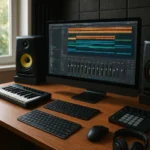
Did you know that the average hit song contains just 250 to 400 words, often written at a 3rd-grade reading level? That means simplicity and authenticity often trump complexity. In this article, we’ll reveal how to tap into your personal stories, craft unforgettable hooks, and even overcome that dreaded writer’s block. Plus, we’ll share insider tips on the best apps and home recording setups to bring your lyrics to life. Ready to turn your home into a songwriting studio? Let’s dive in!
Key Takeaways
- Start with authentic inspiration by mining your own experiences and surroundings for lyrical ideas.
- Craft catchy hooks and memorable choruses that stick in listeners’ minds.
- Understand song structure—verses, choruses, bridges—to tell your story effectively.
- Use literary devices and rhyme schemes to elevate your lyrics beyond the ordinary.
- Leverage technology with songwriting apps and simple home recording gear to refine and record your work.
- Collaborate remotely to expand your creative horizons and polish your songs.
- Study famous lyrics to learn techniques from the pros and apply them to your own writing.
- Overcome writer’s block with creative exercises and fresh perspectives.
By the end of this guide, you’ll have the tools, techniques, and confidence to write your own song lyrics at home—and maybe even record a demo that sounds like a pro!
Table of Contents
- ⚡️ Quick Tips and Facts for Writing Song Lyrics at Home
- 🎵 The Art and Evolution of Writing Song Lyrics: A Brief Overview
- 📝 1. How to Start Writing Your Own Song Lyrics: Finding Inspiration at Home
- 🎯 2. Crafting Catchy Hooks and Memorable Choruses: Secrets to Songwriting Success
- 📚 3. Mastering Song Structure: Verses, Bridges, and More Explained
- 💡 4. Using Literary Devices and Rhyme Schemes to Enhance Your Lyrics
- 🎤 5. Writing Lyrics for Different Music Genres: Tailoring Your Words
- 🧠 6. Overcoming Writer’s Block: Creative Exercises and Tips
- 🎧 7. Recording and Refining Your Lyrics at Home: Tools and Techniques
- 📱 8. Best Apps and Software for Writing Song Lyrics on Your Devices
- 🤝 Collaborating Remotely: How to Co-Write Lyrics with Others from Home
- 💬 Analyzing Famous Song Lyrics: What You Can Learn from the Pros
- 🎯 Quick Tips for Polishing and Finalizing Your Song Lyrics
- 🔚 Conclusion: Your Journey to Writing Great Song Lyrics at Home
- 🔗 Recommended Links for Aspiring Songwriters
- ❓ FAQ: Your Top Questions About Writing Song Lyrics Answered
- 📚 Reference Links and Resources for Songwriting
Here is the main content for your article, crafted by the expert team at “Make a Song™”.
⚡️ Quick Tips and Facts for Writing Song Lyrics at Home
Welcome, future wordsmiths! Before we dive deep into the magical, sometimes maddening, world of lyric writing, let’s get you warmed up. Think of this as the pre-show soundcheck. Here are some juicy tidbits and lightning-fast tips to get your creative gears turning. If you’re wondering, “How can I create my own song?“, you’ve come to the right place—it all starts with the words.
| Quick Facts About Songwriting ✍️ |
|---|
| Most Common Theme: Love, in all its glorious and messy forms, remains the most popular topic in song lyrics. |
| Hit Song Word Count: The average hit song on the Billboard Hot 100 has between 250 and 400 words. |
| Reading Level: Many popular songs are written at a 3rd-grade reading level, proving that simplicity is often key to connecting with a wide audience. |
| Inspiration Source: A study found that over 60% of songwriters draw inspiration from personal experiences. |
Lightning-Round Tips ⚡
- ✅ Carry a Notebook (or use an app!): Inspiration strikes like lightning—and often disappears just as fast. Be ready to capture that million-dollar line, whether you’re in line for coffee or half-asleep at 3 AM. We’ll get into the best apps later!
- ✅ Start with a Title: Sometimes, a killer title is all you need to unlock the entire story of a song. Try brainstorming a list of intriguing titles first.
- ❌ Don’t Strive for Perfection on the First Draft: Seriously, don’t. The first draft is for making a mess. It’s for getting ideas out of your head and onto the page. You can clean it up later. As one expert puts it, the goal is to “write down any words, phrases, or images related to your story without worrying about structure or rhyme.”
- ✅ Read Your Lyrics Aloud: This is non-negotiable! The way words sound is just as important as what they mean. Reading them aloud helps you catch awkward phrasing and find a natural rhythm.
- ❌ Don’t Force Rhymes: A bad rhyme is worse than no rhyme at all. If it sounds cheesy or unnatural, find another way to say it. “Don’t force rhymes; let them come naturally.”
🎵 The Art and Evolution of Writing Song Lyrics: A Brief Overview
Ever wonder how we got from fireside chants to the intricate wordplay of modern hip-hop? Songwriting is one of humanity’s oldest art forms, a direct line to our storytelling ancestors. For millennia, history, culture, and emotion were passed down not through books, but through song.
From the epic poems of ancient Greece recited with a lyre, to the soulful spirituals that coded messages of freedom, to the protest anthems of the 1960s that shaped a generation—lyrics have always been more than just words. They are a snapshot of the human experience.
Here at Make a Song™, we see ourselves as part of that long tradition. The tools have changed—we’ve swapped the lyre for laptops and DAWs (Digital Audio Workstations)—but the core mission is the same: to tell a story and make someone feel something. The best lyrics are often “emotionally charged.” So as you sit at home, you’re not just writing a song; you’re tapping into a powerful, ancient magic. No pressure, right? 😉
📝 1. How to Start Writing Your Own Song Lyrics: Finding Inspiration at Home
“But I have nothing to write about!” — Every songwriter, ever.
We hear you. Staring at a blank page can feel like staring into the void. But here’s the secret: your life is an endless well of inspiration. You just need to know how to lower the bucket. For more ideas, check out our category on Lyric Inspiration.
Tapping into Your Own Story
The most powerful songs are born from genuine emotion. Authenticity is magnetic. As the old saying goes, “write what you know.”
- Emotional Mining: Think about a time you felt a powerful emotion—joy, heartbreak, anger, nostalgia. Don’t just remember it; relive it. What did you see? What smells were in the air? Who was with you? Write it all down. This is your raw material.
- The “Object” Technique: Pick an object in your room. A worn-out t-shirt, a coffee mug, a photograph. Now, tell its story. Where did it come from? What has it “seen”? This exercise can unlock surprising memories and feelings.
Observing the World Like a Spy 🕵️ ♀️
You don’t have to live a dramatic life to write compelling lyrics. You just have to pay attention.
- Eavesdrop (Ethically!): Sit in a park or a coffee shop and listen to the snippets of conversation around you. You’ll hear declarations of love, petty arguments, and profound confessions. There’s a song in every single one.
- Sensory Details: Go for a walk with the sole purpose of noticing things. The way the rain looks on asphalt, the sound of distant sirens, the smell of cut grass. Use vivid, sensory language to “show, don’t just tell.” Instead of saying “the tea tasted like lavender,” try something more evocative, like “the lavender lounged on my tea-soaked tongue.”
🎯 2. Crafting Catchy Hooks and Memorable Choruses: Secrets to Songwriting Success
The chorus is the heart of your song. It’s the part people will scream back at you during a concert. It’s the part that gets stuck in their head for days. The chorus should contain the main message, the central theme of your lyrical story.
What Makes a Great Chorus?
- It’s Simple and Repetitive: This isn’t the place for complex poetry. The chorus needs to be easy to remember and sing along to.
- It’s a Lyrical and Melodic Payoff: The verses build tension and tell the story; the chorus releases that tension with a powerful, memorable statement.
- It Contains the Hook: The “hook” is often the title of the song and the most infectious line. It’s the bit that hooks the listener.
Our lead producer, Alex, has a great metaphor for this: “Think of your song as a journey. The verses are the winding roads you travel, and the chorus is the breathtaking viewpoint you keep coming back to. Each time you return, you appreciate it a little more.”
Pro-Tip: The Question and Answer Method
A great way to connect your verse and chorus is to have the verse ask a question (either literally or figuratively) that the chorus answers.
- Verse: “I’ve been walking through a haze for days / Every face looks the same in this maze…” (The problem/question)
- Chorus: “But your love is the lighthouse in the storm / Guiding me home, keeping me warm.” (The solution/answer)
📚 3. Mastering Song Structure: Verses, Bridges, and More Explained
Song structure is the blueprint of your song. It guides the listener on an emotional journey, creating anticipation, tension, and release. While there are no hard-and-fast rules, understanding common structures is crucial before you can creatively break them.
Here’s a breakdown of the most common song sections:
- Verse: This is your storytelling section. Each verse typically pushes the narrative forward with new details and perspectives.
- Chorus: As we discussed, this is the main event! It’s the core message and is usually repeated multiple times with the same lyrics and melody.
- Bridge: The bridge is a departure. It offers a change in mood, perspective, or music to break up the repetition of the verse-chorus cycle. It often builds tension before leading into the final chorus.
- Pre-Chorus: A short section that builds anticipation right before the chorus hits. It’s the musical equivalent of “Wait for it…”
- Outro: The ending of the song. It can be a fade-out, a big final chorus, or a quiet, reflective moment.
Common Song Structures Visualized
| Structure Name | Layout | Common In |
|---|---|---|
| Verse-Chorus-Verse-Chorus | V-C-V-C | Pop, Rock, Country |
| Verse-Chorus-Verse-Chorus-Bridge-Chorus | V-C-V-C-B-C | Most modern popular music |
| AABA (32-bar form) | Verse-Verse-Bridge-Verse | Jazz, Tin Pan Alley, older Pop |
Don’t be afraid to experiment! Reordering these sections can completely change the impact of your story.
💡 4. Using Literary Devices and Rhyme Schemes to Enhance Your Lyrics
Ready to move from songwriter to lyrical wizard? Literary devices are your magic spells. They elevate your words from simple statements to evocative art.
- Metaphor/Simile: Comparing two unlike things. (Simile uses “like” or “as”).
- Metaphor: “Your voice is a fire in the cold.”
- Simile: “Your voice is like a fire in the cold.”
- Imagery: Using sensory details to paint a picture in the listener’s mind. Engage sight, sound, smell, taste, and touch.
- Alliteration: Repeating the same consonant sound at the beginning of words. “Whispering winds weave through the willows.” It just sounds cool.
The Power of Rhyme (and No Rhyme!)
Rhyme can make lyrics musical and memorable, but it’s a tool, not a rule. The way you structure your rhymes can dramatically affect the listener’s emotions.
As explained in this fantastic video on lyrical techniques, the first and last lines of a section are the most important. You want to make those lines count!
- AABB (Consecutive Rhymes): Rhyming every line can create a sense of stability and confidence. It feels resolved and strong.
- ABAB (Alternating Rhymes): This creates a nice, flowing feeling.
- No Rhyme: Intentionally avoiding rhymes can make a listener feel tense and unsettled. This is a powerful tool! If your song is about anxiety or uncertainty, leaving the listener hanging without a rhyme can perfectly mirror the song’s theme.
A truly advanced technique is to build a pattern of rhymes and then break it. Imagine three lines that rhyme perfectly, followed by a fourth that doesn’t. This creates a feeling of something being lost or “getting away,” which can make your song mean more than just the words that are there.
🎤 5. Writing Lyrics for Different Music Genres: Tailoring Your Words
Lyrics aren’t one-size-fits-all. The story you tell in a folk song will be very different from the vibe you create in an EDM track. Understanding genre conventions is key to writing lyrics that feel authentic and connect with your intended audience.
- Pop: Focus on universal themes, catchy hooks, and a conversational tone. The chorus is king.
- Hip-Hop/Rap: This genre is a playground for wordplay. Intricate rhyme schemes, clever metaphors (punchlines), and rhythmic flow are paramount. Storytelling can range from personal narratives to social commentary.
- Country: Storytelling is at the heart of country music. Lyrics are often direct, honest, and filled with specific details about everyday life, love, and loss.
- Folk/Singer-Songwriter: Often deeply personal and poetic. There’s a strong emphasis on narrative, imagery, and conveying a specific mood or message.
- Rock: The lyrical themes in rock are vast, but often center on rebellion, passion, social issues, and high-energy emotions. The attitude is as important as the words.
- EDM/Dance: Lyrics are often simpler, more repetitive, and serve to enhance the track’s energy and vibe. The focus is on creating a mantra-like hook that gets people moving.
Pro-Tip: Listen actively to your favorite artists in your chosen genre. Don’t just hear the lyrics—analyze them. What stories are they telling? How are they using rhyme and rhythm? You can learn a ton by studying the masters.
🧠 6. Overcoming Writer’s Block: Creative Exercises and Tips
Writer’s block is the boogeyman in every songwriter’s closet. It happens to everyone, from first-timers to seasoned pros. The key is not to panic, but to have a toolkit of strategies to break through the wall.
Creative Un-Blocking Exercises
- Freewriting: Set a timer for 10 minutes. Pick a topic—any topic—and write continuously without stopping, without judging, and without lifting your pen (or fingers) from the page. It doesn’t have to be good. The goal is to just get the words flowing.
- Use a Writing Prompt: There are thousands of lyric prompts online. Find one and force yourself to write a verse about it. For example: “Write about a secret you can’t tell anyone,” or “Describe the color yellow to someone who is blind.”
- Change Your Instrument: If you usually write on guitar, try writing to a simple piano loop or a drum beat. Changing the musical context can spark new lyrical ideas. Check out our Instrument Tutorials for inspiration.
- The “Opposite” Game: Take a famous song and try to write lyrics from the opposite perspective. Write the response to “Jolene.” Write about why “I Will Always Love You” is a bad idea. It’s a fun way to get out of your own head.
Sometimes, the best thing you can do is step away. If you’re feeling uninspired, don’t be afraid to take a break, go out into the world, and have some experiences worth writing about!
🎧 7. Recording and Refining Your Lyrics at Home: Tools and Techniques
Your lyrics aren’t finished until you’ve sung them. Words on a page are silent; they only come to life when they’re performed. This is the stage where you refine the rhythm, flow, and phrasing to perfectly match your melody.
Why You MUST Record Yourself
Even a simple voice memo on your phone is a powerful tool.
- It reveals awkward phrasing: Lines that look great on paper can be a mouthful to sing. Recording yourself will immediately highlight clunky phrases.
- It helps you find the rhythm: You’ll naturally start to feel out the cadence and syncopation of your words. This is crucial for making your lyrics “singable.”
- It solidifies your melody ideas: Singing your lyrics helps you experiment with melodies and find what works best. For more on this, explore our Melody Creation section.
Setting Up a Simple Home Vocal Booth
You don’t need a million-dollar studio. You can get great results with a simple setup in your closet! Building a DIY Recording Studio is easier than you think.
- The Microphone: A quality USB microphone like the Audio-Technica AT2020 or the Rode NT-USB+ is a fantastic starting point. They plug directly into your computer and offer excellent clarity.
- The Space: A walk-in closet is perfect because the clothes absorb sound reflections, preventing echo. If you don’t have one, hang up some heavy blankets around your recording area.
- The Software: Free software like Audacity or GarageBand (for Mac users) is more than enough to record your vocal ideas and start layering tracks.
👉 CHECK PRICE on:
- Audio-Technica AT2020: Amazon | Sweetwater | Guitar Center
- Rode NT-USB+: Amazon | Sweetwater | Rode Official Website
📱 8. Best Apps and Software for Writing Song Lyrics on Your Devices
Inspiration can strike anywhere, so your songwriting tools should be as mobile as you are. While a classic pen and paper is great, these apps can supercharge your process with helpful features like rhyme dictionaries, thesauruses, and cloud syncing.
Songwriting App Ratings
| App | Overall Rating | Functionality | Ease of Use | Special Features |
|---|---|---|---|---|
| Evernote | 8/10 | 9/10 | 8/10 | Excellent organization, audio notes |
| Songwriter’s Pad | 9/10 | 9/10 | 7/10 | Rhyme/thesaurus, song structure |
| RhymeZone | 7/10 | 7/10 | 9/10 | The ultimate rhyming dictionary |
| Google Keep | 8/10 | 7/10 | 10/10 | Simple, fast, great for quick notes |
In-Depth App Reviews
Evernote: The Digital Trapper Keeper
Evernote isn’t just for songwriters, but it’s one of our favorite tools. Think of it as a digital binder for all your ideas.
- Features: You can create separate notebooks for different songs or projects, tag ideas with keywords (e.g., “verse idea,” “sad song”), and clip inspiration from the web.
- Benefits: ✅ The ability to record audio notes directly into a text file is a game-changer. Hum a melody idea and write the corresponding lyrics right underneath it. Its powerful search function means you’ll never lose a line again.
- Drawbacks: ❌ It can feel a bit bloated if you only use it for lyrics, and some of the best features are behind a subscription.
👉 Shop Evernote on: Evernote Official Website
Songwriter’s Pad: The All-in-One Studio
This app is built from the ground up for musicians. It’s less of a notepad and more of a dedicated writing environment.
- Features: It includes a built-in rhyming dictionary, thesaurus, and syllable counter. You can organize your lyrics by section (verse, chorus, bridge) and even add chord notations.
- Benefits: ✅ Having all the essential tools in one place prevents you from having to switch between multiple apps, keeping you in the creative flow. The “mood” feature, which suggests words based on emotion, is surprisingly useful for beating writer’s block.
- Drawbacks: ❌ The interface can be a little less intuitive than a simple notes app, and it’s a premium product.
👉 Shop Songwriter’s Pad on: Apple App Store | Google Play Store
RhymeZone: The Rhyming Powerhouse
Okay, it’s a website and an app, but it’s an indispensable tool. RhymeZone is the undisputed champion of rhyming dictionaries.
- Features: It doesn’t just give you perfect rhymes. You can search for near rhymes, synonyms, related words, and even find lyrics that contain your search term.
- Benefits: ✅ It’s fast, free, and incredibly comprehensive. The “near rhymes” feature is perfect for finding rhymes that sound natural and not forced.
- Drawbacks: ❌ It’s a tool, not a writing environment. You’ll be copying and pasting words into your primary notes app.
🤝 Collaborating Remotely: How to Co-Write Lyrics with Others from Home
Two heads are often better than one. Collaborating can push you out of your comfort zone and lead to ideas you never would have discovered on your own. And thanks to modern technology, your co-writer can be across the street or across the globe.
Tools for a Seamless Remote Collab
- For Lyrics: Google Docs is your best friend. You can write and edit in real-time, leave comments, and see your partner’s cursor as they type. It’s simple, free, and effective.
- For Music: Platforms like BandLab and Soundtrap (by Spotify) are virtual studios that allow you to record and mix tracks together in the cloud. You can work on the same project file from different locations.
Tips for a Successful Co-Writing Session
- Establish a Goal: Are you trying to write a full song in one session? Or just brainstorm ideas for the chorus? Knowing the goal keeps you focused.
- Leave Your Ego at the Door: The mantra of co-writing is “best idea wins.” Be open to trying things you’re unsure about and be willing to let go of a line you love if something better comes along.
- Define the Roles (Loosely): Sometimes it helps to have one person focus more on lyrics and the other on melody, but don’t be afraid to switch!
- Discuss the Splits: It can be an awkward conversation, but it’s crucial. Before you start, agree on how you’ll split the songwriting credits (e.g., 50/50). This prevents headaches later on. For more on this, see our guide to Copyright and Licensing.
💬 Analyzing Famous Song Lyrics: What You Can Learn from the Pros
The best way to learn is to study the greats. Let’s break down the lyrical genius of a couple of well-known songs to see these principles in action.
Case Study 1: “Yesterday” by The Beatles
- The Concept: The song starts with an incredibly simple and relatable premise: “Yesterday, all my troubles seemed so far away.” It’s a universal feeling of nostalgia and loss.
- The Structure: It uses a variation of the AABA structure. The verses (A sections) describe the problem, and the bridge (“Why she had to go, I don’t know…”) provides a moment of reflection and questioning before returning to the main theme.
- The Simplicity: The language is incredibly direct. There are no fancy metaphors, just pure, honest emotion. It proves that you don’t need a huge vocabulary to write a timeless classic.
Case Study 2: “Lose Yourself” by Eminem
- The Imagery: From the very first line, “His palms are sweaty, knees weak, arms are heavy,” Eminem puts you directly into the character’s body. You can feel the nervousness and adrenaline. This is a masterclass in “showing, not telling.”
- The Rhyme Scheme: The song is famous for its complex internal and multi-syllable rhymes. He doesn’t just rhyme the last word of the line; he creates intricate patterns within the lines themselves, which drives the song’s incredible momentum.
- The Story Arc: The song has a clear narrative. It sets the scene, introduces the conflict (the fear of failure), raises the stakes, and builds to a climactic resolution where the protagonist seizes his one shot. It’s a three-act play in under six minutes.
🎯 Quick Tips for Polishing and Finalizing Your Song Lyrics
You’ve written your verses, crafted your chorus, and survived writer’s block. You’re almost there! This final polish is what separates a good song from a great one.
- ✅ The “Every Word” Test: Go through your lyrics line by line and ask: “Does this word need to be here? Is there a stronger, more interesting, or more concise way to say this?”
- ✅ Get a Second Opinion: Play the song for a trusted friend (one who will be honest!). Watch their reaction. Do they connect with it? Are there any lines that confuse them? Fresh ears will catch things you’ve missed.
- ✅ Check for Clichés: Scan your lyrics for overused phrases (“heart of stone,” “love is blind,” “crying a river”). Try to find a fresh way to express a common idea.
- ✅ Read it Backwards: This sounds weird, but reading your lyrics from the last line to the first helps you look at them out of context, making it easier to spot weak words or awkward phrases.
- ✅ Let it Rest: Step away from the song for a few days. When you come back to it, you’ll have a new perspective and will be able to see its strengths and weaknesses more clearly.
From Lyric Idea to Recipient-Ready Greeting
If the words are meant for a particular person rather than a general release, the most useful raw material is often a short recipient brief: the occasion, two or three specific memories, an inside joke, the desired tone, and anything the song should avoid. Singagram can use that direction in a write-your-own, editable-draft, or surprise-me lyric path and turn it into an audio or animated song greeting.
That guided route is useful for a gift; it is not a substitute for learning the songwriting craft when writing and revising the song yourself is the point.
🔚 Conclusion: Your Journey to Writing Great Song Lyrics at Home

Wow, what a ride! From the spark of inspiration to the final polish, writing your own song lyrics at home is an adventure that blends creativity, emotion, and craft. Remember, songwriting is a skill honed over time—don’t expect perfection on your first try. Instead, embrace the process: let your authentic voice shine, experiment with structures and rhymes, and don’t be afraid to rewrite and refine.
We’ve unpacked how to find inspiration in your own life and surroundings, how to craft unforgettable hooks, and how to use literary devices to elevate your lyrics. Plus, we explored the best tools and apps to keep your ideas flowing anytime, anywhere. And if you ever hit that dreaded writer’s block, you now have a toolkit of creative exercises to bust through it.
If you’re ready to take your lyrics from notebook scribbles to recorded demos, setting up a simple home studio with gear like the Audio-Technica AT2020 or Rode NT-USB+ will get you sounding professional in no time.
So, what’s the secret? It’s this: write your story, your way, and keep at it. Every great songwriter started exactly where you are—at home, with a pen and a dream. Now it’s your turn to make magic.
🔗 Recommended Links for Aspiring Songwriters
Ready to gear up and dive deeper? Here are some of the best tools and resources we mentioned, plus a few extra gems to fuel your songwriting journey:
Microphones for Home Recording
- Audio-Technica AT2020: Amazon | Sweetwater | Guitar Center
- Rode NT-USB+: Amazon | Sweetwater | Rode Official Website
Songwriting Apps
- Evernote: Official Website
- Songwriter’s Pad: Apple App Store | Google Play Store
- RhymeZone: Website
Must-Read Books on Songwriting
- “Writing Better Lyrics” by Pat Pattison — A comprehensive guide from a Berklee College of Music professor that dives deep into lyric craft. Amazon Link
- “Tunesmith: Inside the Art of Songwriting” by Jimmy Webb — A legendary songwriter’s personal insights and techniques. Amazon Link
- “How to Write Songs on Guitar” by Rikky Rooksby — Great for those who want to pair lyrics with melody and chords. Amazon Link
❓ FAQ: Your Top Questions About Writing Song Lyrics Answered

How do you start a song?
Starting a song often begins with finding your core idea or emotion. This could be a phrase, a feeling, or a story you want to tell. Many songwriters start with a title or hook—a catchy phrase that encapsulates the song’s theme. From there, brainstorm related words, images, and emotions without worrying about structure or rhyme. Remember, the first draft is about exploration, not perfection.
Read more about “Generate a Song Automatically: 10 AI Tools That Create Hits in Minutes 🎶 (2025)”
How do you turn words into songs?
Turning words into songs involves pairing your lyrics with a melody and rhythm. Start by reading your lyrics aloud to find their natural cadence. Experiment with humming or playing simple chord progressions on an instrument like guitar or piano. The melody should complement the emotional tone of your lyrics. Tools like Melody Creation tutorials can help you develop this skill.
Read more about “Write Song Lyrics Online: 12 Game-Changing Tools & Tips for 2025 🎤”
How can I make a song at home?
Making a song at home is easier than ever thanks to affordable gear and software. Begin by writing your lyrics and melody. Then, record your vocals using a USB microphone such as the Audio-Technica AT2020 or Rode NT-USB+. Use free or affordable DAWs like Audacity or GarageBand to layer instruments, arrange your song, and mix it. Check out our DIY Recording Studio guides for step-by-step help.
Read more about “How Do You Get a Song Written for You? 🎵 7 Expert Ways Revealed (2025)”
How to write song lyrics with no experience?
Start simple! Focus on writing about what you know and feel. Don’t worry about rhyme or structure at first—just get your ideas down. Use songwriting prompts or exercises like freewriting to spark creativity. Study lyrics from your favorite songs to understand how they tell stories. Over time, practice will build your confidence and skill.
Read more about “Can I Use Online Tools to Make a Song? 5 Best Picks (2025) 🎵”
How do I come up with my own song?
Your own song comes from your unique perspective. Look inward for emotions or outward for stories and observations. Use techniques like the “object” exercise (writing about an everyday item) or the “opposite” game (writing from a different viewpoint) to generate ideas. Keep a journal or voice memo app handy to capture inspiration anytime.
Read more about “How to Use Modes in Songwriting: 7 Secrets to Unlock Your Sound 🎵”
What are the best tips for writing song lyrics at home?
- Write regularly: Make it a habit, even if it’s just 10 minutes a day.
- Read lyrics aloud: This helps with flow and rhythm.
- Avoid clichés: Find fresh ways to express common themes.
- Use sensory details: Engage the listener’s senses to create vivid imagery.
- Don’t force rhymes: Let rhymes come naturally to avoid awkward phrasing.
Read more about “Make a Song Like a Pro: 12 Insider Secrets to Create Hits in 2025 🎵”
How can I find inspiration for my own song lyrics?
Inspiration is everywhere—your life experiences, nature, conversations, books, movies, and even dreams. Try to observe the world like a detective, noticing small details others might miss. Keep a notebook or app for jotting down ideas. If stuck, try writing prompts or collaborate with others for fresh perspectives.
Read more about “15 Proven Tips to Improve Songwriting Skills Quickly (2025) 🎵”
What tools can help me create song lyrics on my computer?
Apps like Evernote and Songwriter’s Pad offer rhyme dictionaries, thesauruses, and organizational features. RhymeZone is excellent for finding rhymes and synonyms. For recording and arranging, free DAWs like Audacity and GarageBand are great starting points.
Read more about “How Can I Make a Song Online for Free? 10 Easy Ways (2025) 🎵”
How do I structure my song lyrics for a catchy melody?
Most popular songs follow a structure like Verse – Chorus – Verse – Chorus – Bridge – Chorus. The verse tells the story, the chorus delivers the main message and hook, and the bridge offers contrast or a new perspective. Keep your chorus simple and repetitive for memorability. Experiment with pre-choruses or outros to add interest.
Read more about “Music Theory Essentials for Pop Songs: 7 Game-Changing Secrets 🎶 (2025)”
📚 Reference Links and Resources for Songwriting
- Native Instruments: How to Write Song Lyrics
- Bold Music Lessons: Songwriting for Beginners
- Audio-Technica Official Website: AT2020 Microphone
- Rode Microphones: NT-USB+
- Evernote: Official Site
- Songwriter’s Pad: Official Site
- RhymeZone: Website
- Ellie Holcomb Facebook Post: When I felt the light of the moon on my face, the …
We hope this guide lights your path to songwriting success. Now, grab your pen, your mic, or your phone—and start making your own song today! 🎶