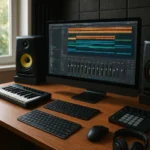
🎧 15 Steps to Make Music for Your Song: From Beginner to Beatmaker in 2024 🎧

greyscale photo of man playing spinet piano close-up photo

Have you ever dreamt of crafting a song that gets stuck in your head, a melody that makes you want to dance, or a beat that sets your soul on fire? We’ve all been there, staring at a blank screen, wondering how to turn those musical ideas into reality. But fear not, aspiring music creators! This comprehensive guide will walk you through the 15 essential steps to make music for your song, from understanding the basics of music production to mastering the art of mixing and mastering. We’ll cover everything from choosing the right tools to developing your creative vision, and along the way, we’ll share insider tips and tricks from the music producers at Make a Song™.

Remember that time you heard a song on the radio and couldn’t stop humming it? That’s the power of a great melody! Or maybe you’ve been captivated by a beat that makes you want to move your feet? That’s the magic of rhythm! This guide will unlock those secrets and empower you to create music that resonates with your soul and captivates your listeners. So, grab your headphones, fire up your DAW, and let’s embark on this exciting journey together!

Key Takeaways #key-takeaways

  • Music production is a journey, not a race. Embrace the learning curve, experiment with different sounds and styles, and most importantly, have fun!
  • Start with the basics. You don’t need a fancy studio to make great music. Begin with a computer, a decent pair of headphones, and a free DAW like GarageBand.
  • Find your tribe. Connect with other music creators online or in person. Share your work, get feedback, and learn from each other.
  • Listen up! Pay close attention to the music you love. Analyze the arrangement, the instruments used, and the production techniques. This will train your ear and inspire your own creations.
  • The right tools are essential. Invest in a powerful computer, a quality audio interface, microphones, headphones, and a DAW that suits your workflow and musical style.

👉 Shop DAWs on:

👉 Shop Audio Interfaces on:


Table of Contents


Quick Tips and Facts #quick-tips-and-facts

Want to dive into the world of music production but feeling overwhelmed? Don’t worry, we’ve all been there! Here at Make a Song™, we’re passionate about helping you find your sound. Before we get into the nitty-gritty, here are a few golden nuggets to get you started: 🎶

  • Start Simple: You don’t need a fancy studio to make great music. Begin with the basics – a computer, a decent pair of headphones, and a free DAW like GarageBand. 🎧
  • Embrace the Learning Curve: Music production is a journey, not a race. Be patient, experiment, and don’t be afraid to make mistakes. That’s where the magic happens! ✨
  • Find Your Tribe: Connect with other music creators online or in person. Share your work, get feedback, and learn from each other. Collaboration can spark incredible creativity! 🤝
  • Listen Up: Pay close attention to the music you love. What makes it tick? Analyze the arrangement, the instruments used, the production techniques. This will train your ear and inspire your own creations. 👂
  • Have Fun! Music production should be enjoyable. Don’t get bogged down by technicalities. Let your creativity flow and have a blast! 😄

For a more in-depth guide to kickstart your music production journey, check out our article: 🎧 10 Steps to Make Your Own Music in 2024: From Beginner to Beatmaker 🎧.

The Evolution of Music Production: From Tape to Digital #the-evolution-of-music-production-from-tape-to-digital

Video: From Phonographs to Spotify: A Brief History of the Music Industry.


Music production has undergone a dramatic transformation over the decades. Remember the days of bulky tape machines and endless splicing? Thankfully, those days are long gone! Let’s take a trip down memory lane and explore this fascinating evolution: 🕰️

The Analog Era: Where it all began 📻

In the early days, music was recorded and mixed using analog equipment. Think massive mixing consoles, tape reels, and outboard gear. While these tools had their own charm and warmth, they were expensive, cumbersome, and required specialized skills to operate.

The Digital Revolution: DAWs Take Center Stage 💻

The advent of digital audio workstations (DAWs) revolutionized music production, making it accessible to anyone with a computer. DAWs like Cubase and Pro Tools emerged, offering powerful tools for recording, editing, arranging, and mixing music entirely within the digital realm.

The Rise of Home Studios: Empowering the Bedroom Producer 🏠

As technology advanced and became more affordable, home studios began to flourish. No longer were musicians bound by expensive studio time. They could now create, record, and produce professional-quality music from the comfort of their own homes.

The Mobile Music Movement: Creating on the Go 📱

Today, music production is more accessible than ever, thanks to the rise of mobile apps and devices. Apps like GarageBand and FL Studio Mobile put powerful production tools right at your fingertips, allowing you to capture ideas, create beats, and even record full songs on your smartphone or tablet.

This evolution has democratized music production, empowering countless individuals to express their creativity and share their music with the world. What an exciting time to be a music creator! 🎉

The Essential Tools for Music Creation: A Comprehensive Guide #the-essential-tools-for-music-creation-a-comprehensive-guide

Video: Music Production For Beginners (Step By Step Masterclass).


Ready to embark on your music production adventure? First things first – you’ll need the right tools for the job! Don’t worry, it’s not as daunting as it seems. Here’s a breakdown of the essentials: 🔨

1. The Heart of Your Studio: The Computer 🖥️

Your computer is the command center of your music production setup. While specific requirements will vary depending on your chosen DAW and the complexity of your projects, a powerful processor, ample RAM, and a fast storage drive (SSD) are crucial for smooth workflow and optimal performance.

Here are a few popular choices:

  • Apple MacBook Pro: Renowned for their stability, user-friendly interface, and seamless integration with Logic Pro X.
  • Custom-Built PCs: Offer greater flexibility in terms of customization and upgradability, allowing you to tailor your system to your specific needs and budget.

2. Your Sonic Gateway: The Audio Interface 🎤

An audio interface acts as the bridge between your computer and the outside world, allowing you to connect microphones, instruments, and other audio gear. It converts analog signals to digital and vice versa, ensuring high-quality recordings and playback.

Key features to consider:

  • Number of Inputs and Outputs: Determine how many microphones, instruments, or other devices you need to connect simultaneously.
  • Preamp Quality: Impacts the clarity and fidelity of your recordings, especially for vocals and acoustic instruments.
  • Phantom Power: Essential for condenser microphones, which require external power to operate.

Popular audio interface brands:

  • Focusrite
  • Universal Audio
  • PreSonus
  • Audient

3. Capturing Your Sound: Microphones 🎙️

Microphones are essential for recording vocals, acoustic instruments, and capturing audio from the real world. Different types of microphones excel in different applications.

Common microphone types:

  • Condenser Microphones: Known for their sensitivity and detailed sound reproduction, making them ideal for vocals, acoustic guitars, and other instruments requiring high fidelity.
  • Dynamic Microphones: More rugged and less sensitive than condensers, making them suitable for loud sources like drums, guitar amps, and live vocals.

Microphone brands to explore:

  • Shure
  • Neumann
  • Rode
  • Audio-Technica

4. Your Sonic Playground: Headphones 🎧

A good pair of headphones is crucial for critical listening during recording, editing, mixing, and mastering. They provide an isolated listening environment, allowing you to hear subtle details and make informed decisions about your sound.

Headphone considerations:

  • Closed-Back vs. Open-Back: Closed-back headphones offer greater isolation, while open-back headphones provide a wider soundstage.
  • Frequency Response: A flat frequency response ensures accurate sound reproduction.
  • Comfort: Long production sessions demand comfortable headphones.

Headphone brands we recommend:

  • Audio-Technica
  • Beyerdynamic
  • Sennheiser
  • Sony

5. The Software Maestro: The DAW 🎼

The digital audio workstation (DAW) is the heart and soul of your music production setup. It’s the software where you record, edit, arrange, mix, and master your music.

Popular DAW options:

  • Logic Pro X: Apple’s flagship DAW, renowned for its intuitive interface, comprehensive features, and vast library of instruments and effects.
  • Ableton Live: Favored by electronic music producers for its session view, powerful looping capabilities, and seamless integration with live performance.
  • Pro Tools: The industry-standard DAW used in professional studios worldwide, known for its robust features, stability, and extensive plugin compatibility.

Choosing the right DAW:

The best DAW for you depends on your workflow, musical style, and personal preferences. Most DAWs offer free trials, allowing you to experiment and find the one that suits you best.

6. Expanding Your Sonic Palette: Plugins 🎹

Plugins are software add-ons that enhance the functionality of your DAW, providing a vast array of virtual instruments, effects, and processing tools.

Plugin categories:

  • Virtual Instruments (VSTs): Emulate the sound of real instruments, from pianos and synths to drums and orchestral strings.
  • Effects Plugins: Add creative and corrective processing to your audio, including EQ, compression, reverb, delay, and more.

Plugin brands worth exploring:

  • Native Instruments
  • Waves
  • FabFilter
  • iZotope

7. Optional Extras: Enhancing Your Setup 🎛️

While not strictly essential, these additional tools can enhance your workflow and creative possibilities:

  • MIDI Keyboard: Provides a tactile way to play and record virtual instruments.
  • Studio Monitors: Speakers specifically designed for accurate sound reproduction, crucial for mixing and mastering.
  • Acoustic Treatment: Improves the acoustics of your recording and listening environment, reducing unwanted reflections and improving clarity.

Unlocking the Power of DAWs: A Beginner’s Guide to Digital Audio Workstations #unlocking-the-power-of-daws-a-beginners-guide-to-digital-audio-workstations

Video: Best DAW For Beginners & The Easiest DAW.


Digital audio workstations (DAWs) can seem intimidating at first, but fear not! With a little guidance, you’ll be navigating these powerful tools like a pro in no time. Let’s demystify the world of DAWs and empower you to start creating: 💪

1. Understanding the Interface: Your Creative Hub 🎛️

The DAW interface is your creative playground. While each DAW has its own unique layout, they generally share common elements:

  • Arrangement View: Displays your project timeline, where you arrange audio and MIDI clips to create your song structure.
  • Mixer: Emulates a traditional mixing console, allowing you to adjust levels, panning, and apply effects to individual tracks.
  • Piano Roll: Provides a visual representation of MIDI notes, enabling you to create and edit melodies, harmonies, and rhythms.

2. Recording Your First Track: Capturing Your Ideas 🎤

Recording audio in a DAW is a straightforward process:

  1. Connect Your Audio Interface: Ensure your audio interface is connected to your computer and recognized by your DAW.
  2. Create a New Track: Select the appropriate track type (audio or instrument) and arm it for recording.
  3. Set Your Levels: Adjust the input gain on your audio interface to ensure a strong signal without clipping.
  4. Hit Record: Start recording your vocals, instrument, or other audio source.
  5. Review and Edit: Listen back to your recording, make any necessary edits, and adjust levels as needed.

3. Working with MIDI: The Language of Digital Music 🎹

MIDI (Musical Instrument Digital Interface) is a protocol that allows digital music devices to communicate with each other. In a DAW, MIDI is used to control virtual instruments, trigger samples, and automate parameters.

  • Creating MIDI Tracks: Create a new MIDI track and choose your desired virtual instrument.
  • Inputting MIDI Notes: Use a MIDI keyboard, your computer keyboard, or the DAW’s piano roll to input MIDI notes.
  • Editing MIDI Data: Adjust note pitch, velocity, timing, and duration to fine-tune your performance.

4. Adding Effects: Shaping Your Sound 🎧

Effects plugins are essential for shaping the tone and character of your audio.

  • EQ (Equalization): Adjusts the frequency balance of your audio, boosting or cutting specific frequencies to enhance clarity, warmth, or presence.
  • Compression: Reduces dynamic range, making loud sounds quieter and quiet sounds louder, adding punch and presence.
  • Reverb: Simulates the sound of different acoustic spaces, adding depth and ambiance.
  • Delay: Creates repeating echoes of your audio, adding rhythm and space.

5. Mixing Your Tracks: Blending the Elements 🎛️

Mixing is the art of balancing individual tracks, adjusting levels, panning, and applying effects to create a cohesive and polished sound.

  • Setting Levels: Use the mixer’s faders to adjust the volume of each track, ensuring a balanced mix.
  • Panning: Position instruments and vocals in the stereo field, creating width and separation.
  • Using EQ: Clean up muddy frequencies, boost essential ranges, and create space for each instrument to shine.
  • Adding Effects: Use effects sparingly to enhance the overall sound, adding depth, width, and excitement.

6. Mastering Your Music: The Final Polish ✨

Mastering is the final stage of music production, where you optimize the overall loudness, clarity, and sonic balance of your mix, preparing it for distribution.

  • Mastering Plugins: Use specialized mastering plugins like EQ, compression, limiting, and stereo widening to fine-tune the overall sound.
  • Reference Tracks: Compare your mix to commercially released songs in your genre to ensure it meets industry standards.
  • Exporting Your Master: Export your final mix as a high-quality audio file (WAV or AIFF) for distribution.

Building the Foundation: Crafting Beats That Groove #building-the-foundation-crafting-beats-that-groove

Video: Groove In G | Playing For Change | Song Around The World.


A compelling beat is the backbone of many genres, driving the energy and rhythm of your music. Whether you’re into hip-hop, EDM, or pop, crafting infectious beats is an art form in itself. Let’s break it down: 🥁

1. Understanding Rhythm: The Pulse of Your Music 🎶

Rhythm is the foundation of music, dictating the timing and groove of your beats. Familiarize yourself with basic rhythmic concepts:

  • Beats: The regular pulses that divide music into equal units of time.
  • Measures: Groups of beats, typically containing 4 beats each.
  • Tempo: The speed of the music, measured in beats per minute (BPM).

2. Choosing Your Sounds: The Building Blocks of Your Beat 🎧

The sounds you choose will shape the character and style of your beat. Experiment with different drum samples, loops, and virtual instruments to find the sonic palette that inspires you.

  • Kick Drum: Provides the low-end thump, often emphasizing the downbeat.
  • Snare Drum: Adds a sharp, transient snap, typically placed on the 2nd and 4th beats.
  • Hi-Hats: Create a rhythmic foundation with their crisp, percussive sound.
  • Percussion: Add variety and texture with shakers, tambourines, claps, and other percussive elements.

3. Laying Down the Foundation: Creating Your Drum Pattern 🥁

Start by establishing a basic drum pattern, focusing on the kick, snare, and hi-hats. Experiment with different rhythms and variations to create a groove that feels natural and engaging.

  • 4/4 Time Signature: The most common time signature in popular music, characterized by four beats per measure.
  • Backbeat: A rhythmic emphasis on the 2nd and 4th beats, creating a driving feel.
  • Syncopation: Placing rhythmic accents on off-beats, adding syncopation and groove.

4. Adding Variation and Interest: Keeping the Listener Engaged 🎶

Once you have a solid foundation, add variation and interest to your beat to prevent monotony.

  • Fill Ins: Short, rhythmic flourishes that add excitement and break up repetitive patterns.
  • Breakdowns: Sections where the beat drops out or changes significantly, creating anticipation and contrast.
  • Automation: Use automation to gradually change parameters like volume, panning, or effects over time, adding movement and dynamics.

5. Layering and Arrangement: Building a Full Beat 🎧

Layer different drum sounds, loops, and percussive elements to create a full and dynamic beat. Experiment with different combinations and arrangements to find the perfect balance.

  • Layering Kicks and Snares: Combine different kick and snare samples to create a powerful and punchy sound.
  • Adding Percussion: Introduce shakers, tambourines, and other percussive elements to add texture and groove.
  • Using Effects: Apply effects like reverb, delay, and saturation to add depth, width, and character to your drums.

Harmonious Landscapes: Creating Compelling Chord Progressions #harmonious-landscapes-creating-compelling-chord-progressions

Video: How I wish HARMONY was explained to me as a student.


Chord progressions are the harmonic foundation of your music, creating the emotional landscape that your melodies and lyrics will inhabit. Mastering the art of crafting compelling chord progressions is essential for any aspiring songwriter or producer. Let’s dive in: 🎹

1. Understanding Chords: The Building Blocks of Harmony 🎶

Chords are groups of three or more notes played simultaneously, creating harmony and defining the tonal center of your music.

  • Triads: The most basic type of chord, consisting of a root note, a third, and a fifth.
  • Major Chords: Convey a happy, bright, or uplifting feeling.
  • Minor Chords: Evoke a sad, melancholic, or introspective mood.

2. The Circle of Fifths: Your Harmonic Roadmap ⭕

The circle of fifths is a visual representation of the relationships between different keys and chords. It’s an invaluable tool for understanding chord progressions and exploring harmonic possibilities.

  • Key Signatures: Each key signature has a corresponding set of chords that sound harmonious together.
  • Chord Progressions: Moving around the circle of fifths can help you create smooth and logical chord progressions.

3. Common Chord Progressions: Familiar Formulas 🎶

Many popular songs share common chord progressions. Familiarizing yourself with these formulas can provide a solid starting point for your own compositions.

  • I-IV-V-I: A classic progression used in countless rock, pop, and blues songs.
  • ii-V-I: A jazz-inspired progression that creates a sense of resolution.
  • vi-IV-I-V: A popular progression in pop and folk music, known for its emotional impact.

4. Experimenting with Variations: Adding Your Unique Touch 🎶

Don’t be afraid to experiment with variations on common chord progressions to create your own unique sound.

  • Adding Seventh Chords: Seventh chords add complexity and richness to your progressions.
  • Borrowing Chords: Borrowing chords from other keys can create unexpected harmonic twists.
  • Modulating: Changing keys within a song can add drama and interest.

5. Creating Emotional Impact: Chords and Feelings 🎶

Different chord progressions evoke different emotions. Experiment with different combinations to find the sounds that match the mood you’re trying to convey.

  • Major Keys: Generally associated with happiness, joy, and triumph.
  • Minor Keys: Often evoke sadness, longing, or mystery.
  • Chord Voicings: The way you arrange the notes within a chord can also impact its emotional quality.

Melodies That Captivate: Writing Catchy Tunes #melodies-that-captivate-writing-catchy-tunes

Video: This One Melody Tip Will Make Your Melodies GREAT.


A memorable melody is the heart of a great song, the part that gets stuck in your head and keeps you humming along. Crafting melodies that captivate listeners is a skill that can be learned and honed with practice. Here’s how: 🎶

1. Understanding Melody: The Flow of Musical Notes 🎶

A melody is a sequence of single notes that create a musical phrase. It’s the part of the song that you sing along to, the hook that grabs your attention.

  • Pitch: The highness or lowness of a note.
  • Rhythm: The duration and timing of notes, creating the rhythmic flow of the melody.
  • Contour: The overall shape of the melody, whether it ascends, descends, or moves in a wave-like pattern.

2. Finding Inspiration: Sources of Melodic Ideas 🎶

Melodic inspiration can come from anywhere. Train your ear to recognize melodies in everyday life and use them as starting points for your own creations.

  • Nature: Birdsong, ocean waves, and wind chimes can all inspire melodic ideas.
  • Conversations: The natural rhythms and inflections of speech can spark melodic phrases.
  • Other Music: Listen to music in different genres and analyze the melodies that grab your attention.

3. Working with Your Chord Progression: Harmony and Melody 🎶

Your chord progression provides the harmonic framework for your melody. The notes within each chord will sound harmonious with the melody notes played over them.

  • Chord Tones: Using notes from the underlying chord will create a strong and consonant sound.
  • Passing Tones: Notes that fall between chord tones can add movement and interest to your melody.
  • Non-Chord Tones: Notes that fall outside the underlying chord can create tension and release.

4. Creating Memorable Phrases: Repetition and Variation 🎶

Repetition and variation are key elements of a catchy melody. Repeat memorable phrases to reinforce them in the listener’s mind, but introduce variations to keep things interesting.

  • Motifs: Short, distinctive melodic ideas that can be repeated throughout a song.
  • Call and Response: Create a melodic phrase that’s answered by a contrasting phrase.
  • Question and Answer: Use melodic contour to create a sense of question and answer within your melody.

5. Adding Emotion and Expression: Dynamics and Articulation 🎶

Dynamics and articulation bring your melody to life, adding emotion and expression.

  • Dynamics: Vary the volume of your melody to create contrast and emphasis.
  • Articulation: Use techniques like legato (smooth), staccato (short and detached), and accents to add nuance and character.

From Seed to Song: Developing Your Musical Ideas #from-seed-to-song-developing-your-musical-ideas

Video: How to develop your song ideas into full songs.


You’ve got a killer beat, a captivating chord progression, and a memorable melody – now what? It’s time to develop your musical seed into a fully-fledged song! Here’s how to nurture your ideas and bring them to life: 🌱🎶

1. Song Structure: Creating a Framework 🎶

Song structure provides a roadmap for your musical journey, guiding the listener through different sections and emotions. While genres and artists often bend the rules, familiarizing yourself with common song structures can provide a solid foundation.

  • Verse-Chorus Structure: The most prevalent structure in popular music, alternating between verses that tell the story and a chorus that delivers the main hook.
  • Verse-Chorus-Bridge: Introduces a bridge section, offering a contrasting melody, chord progression, or lyrical theme.
  • Other Structures: Explore alternative structures like AABA, verse-chorus-verse-bridge-chorus, or create your own unique arrangement.

2. Developing Your Ideas: Expanding on Your Core Elements 🎶

Once you have a basic structure, flesh out your sections with additional instrumentation, harmonies, and rhythmic variations.

  • Adding Instrumentation: Introduce new instruments to complement your core elements, adding layers of texture and interest.
  • Harmonizing Melodies: Create harmonies to support your main melody, adding depth and richness to your arrangement.
  • Varying Rhythms: Introduce rhythmic variations to keep the energy flowing and prevent monotony.

3. Building Tension and Release: Creating Dynamic Contrast 🎶

A compelling song takes the listener on an emotional journey, building tension and releasing it at strategic points.

  • Rhythmic Intensity: Gradually increase rhythmic intensity to build anticipation and excitement.
  • Harmonic Tension: Introduce dissonant chords or unexpected harmonic changes to create tension.
  • Dynamic Variations: Use volume changes to create contrast and emphasize key moments.

4. Arranging Your Song: Creating a Cohesive Whole 🎶

Arrangement is the art of organizing and structuring your musical ideas to create a cohesive and engaging listening experience.

  • Intro and Outro: Craft an engaging introduction that sets the tone and a satisfying outro that leaves a lasting impression.
  • Instrumental Breaks: Give the vocalist a break with instrumental sections that showcase your musicality.
  • Building to a Climax: Gradually increase the intensity and energy, leading to a satisfying climax.

5. Experiment and Iterate: Finding the Perfect Flow 🎶

Don’t be afraid to experiment with different arrangements, instrumentation, and structural variations. Trust your ears and your instincts, and don’t be afraid to make mistakes along the way.

Mixing Magic: Blending Your Sounds into a Cohesive Whole #mixing-magic-blending-your-sounds-into-a-cohesive-whole

Video: The SECRETS to a BALANCED Mix.


You’ve poured your heart and soul into creating your musical masterpiece – now it’s time to work some mixing magic! Mixing is the crucial stage where you blend individual tracks, sculpt their sounds, and create a balanced and polished sonic landscape. Let’s dive into the art of mixing: 🎧

1. Setting the Stage: Organization and Preparation 🎶

Before you start tweaking knobs, take the time to organize your project and prepare your listening environment.

  • Track Organization: Clearly label and color-code your tracks for easy navigation.
  • Gain Staging: Ensure that each track is peaking at a healthy level without clipping, leaving headroom for mixing.
  • Listening Environment: Calibrate your studio monitors or use headphones to ensure accurate sound reproduction.

2. Balancing the Mix: Levels and Panning 🎛️

The first step in mixing is to establish a balanced foundation by adjusting levels and panning.

  • Setting Levels: Use the mixer’s faders to adjust the volume of each track, ensuring that no instrument overpowers the others.
  • Panning: Position instruments and vocals in the stereo field, creating width and separation. Panning hard-panned elements can create a more immersive soundscape.

3. Sculpting the Sound: Equalization (EQ) 🎧

Equalization (EQ) is a fundamental mixing tool that allows you to shape the tonal balance of your tracks by boosting or cutting specific frequencies.

  • Cleaning Up Mud: Use a high-pass filter to remove unnecessary low frequencies that can make your mix sound muddy.
  • Enhancing Clarity: Boost frequencies in the midrange to enhance clarity and presence.
  • Adding Brightness: Boost high frequencies to add sparkle and air.

4. Controlling Dynamics: Compression 🎛️

Compression is a powerful tool that helps control the dynamic range of your audio, making loud parts quieter and quiet parts louder.

  • Adding Punch and Presence: Use compression to add punch to drums, presence to vocals, and glue to your overall mix.
  • Controlling Dynamics: Tame overly dynamic instruments like vocals and bass to even out their levels.
  • Parallel Compression: Blend a heavily compressed signal with the original signal to add subtle thickness and warmth.

5. Adding Space and Depth: Reverb and Delay 🎧

Reverb and delay are spatial effects that add depth, ambiance, and dimension to your mix.

  • Reverb: Simulates the sound of different acoustic spaces, adding a sense of depth and realism.
  • Delay: Creates repeating echoes of your audio, adding rhythm, space, and interest.

6. Creating a Cohesive Sound: Bus Compression and EQ 🎶

Bus compression and EQ are techniques used to process groups of tracks together, creating a more cohesive and unified sound.

  • Drum Bus Compression: Glue your drum tracks together, adding punch and presence.
  • Vocal Bus Compression: Even out vocal levels and add warmth and intimacy.
  • Master Bus EQ: Make final tonal adjustments to your overall mix, enhancing clarity, warmth, and balance.

Mastering the Art of Mastering: Polishing Your Music for Release #mastering-the-art-of-mastering-polishing-your-music-for-release

Video: How to master a song with BandLab Mastering | Polish tracks with our free online mastering service.


Your mix is sounding sweet – congrats! Now it’s time for the final touch: mastering. Mastering is the crucial last step in music production, where you optimize your music’s overall loudness, clarity, and sonic balance, preparing it for distribution and ensuring it sounds its best across all playback systems. Let’s explore the art of mastering: ✨

1. Understanding the Goals: Loudness, Clarity, and Balance 🎶

Mastering engineers aim to achieve several key goals:

  • Optimal Loudness: Boosting the overall volume of your track to meet industry standards without sacrificing dynamic range.
  • Enhanced Clarity: Improving the clarity and definition of your mix, ensuring that all elements are well-defined and easy to hear.
  • Sonic Balance: Fine-tuning the tonal balance of your track, ensuring that it sounds balanced and pleasing across different playback systems.

2. Mastering Tools: Your Sonic Arsenal 🎧

Mastering engineers employ a range of specialized tools to achieve their goals:

  • EQ: Make subtle adjustments to the overall tonal balance of your track, enhancing clarity, warmth, or presence.
  • Compression: Control the overall dynamic range of your track, increasing perceived loudness without introducing unwanted distortion.
  • Limiting: Set a ceiling for the peak level of your track, preventing clipping and ensuring that it meets loudness standards.
  • Stereo Imaging: Adjust the width and depth of your stereo image, creating a more immersive listening experience.

3. The Mastering Process: A Delicate Touch 🎶

Mastering is a delicate art that requires a trained ear and a deep understanding of audio. Here’s a simplified overview of the process:

  1. Preparation: Import your final mix into your mastering DAW and ensure that it’s properly gain-staged.
  2. Tonal Balancing: Use EQ to make subtle adjustments to the overall tonal balance of your track.
  3. Dynamic Control: Apply compression and limiting to control the dynamic range and increase perceived loudness.
  4. Stereo Enhancement: Use stereo imaging tools to enhance the width and depth of your stereo image.
  5. Final Touches: Add any final touches, such as dithering (adding noise to reduce quantization errors) and fading in and out.

4. DIY Mastering vs. Professional Mastering: Weighing Your Options 🎶

While there are many excellent mastering plugins available, professional mastering engineers bring years of experience and a trained ear to the table. They can often identify subtle issues in your mix that you may have missed and apply their expertise to elevate your music to a professional level.

5. Mastering for Different Platforms: Tailoring Your Sound 🎶

Different playback platforms (e.g., Spotify, Apple Music, YouTube) have different loudness standards and sonic characteristics. Mastering engineers can create multiple masters tailored to each platform, ensuring that your music sounds its best everywhere it’s heard.

Conclusion: Your Journey into Music Production #conclusion-your-journey-into-music-production

brown and black violin

Congratulations! You’ve taken a deep dive into the world of music production, exploring the tools, techniques, and creative processes that go into crafting a song from scratch. Remember, music production is a journey, not a destination. Embrace the learning curve, experiment with different sounds and styles, and most importantly, have fun! The world of music is waiting to be explored, and you have the power to create something truly unique.

👉 Shop DAWs on:

👉 Shop Audio Interfaces on:

👉 Shop Microphones on:

👉 Shop Headphones on:

👉 Shop Plugins on:

Books on Music Production:

  • The Complete Guide to Music Production: Amazon
  • Music Production for the Digital Age: Amazon
  • Mixing Audio: The Art and Science of Engineering Sound: Amazon

FAQ #faq

a man wearing headphones and a microphone

How to create music for a song? #how-to-create-music-for-a-song

Creating music for a song involves several key steps:

1. Brainstorming and Inspiration: Where do you start? 💡

  • Listen to Music: Pay attention to the music you love and analyze its elements.
  • Explore Different Genres: Step outside your comfort zone and explore new sounds and styles.
  • Seek Inspiration in Everyday Life: Nature, conversations, and even mundane experiences can spark creative ideas.

2. Building the Foundation: The Beat and Chord Progression 🥁🎹

  • Choose a Tempo and Time Signature: Set the pace and rhythmic feel of your song.
  • Create a Drum Pattern: Lay down a basic drum groove using samples or virtual instruments.
  • Craft a Chord Progression: Select chords that create a harmonious and emotional landscape.

3. Adding the Melody: The Heart of Your Song 🎶

  • Experiment with Different Scales and Modes: Explore melodic possibilities beyond the major and minor scales.
  • Use Chord Tones and Passing Tones: Create a melody that sounds harmonious with your chord progression.
  • Repeat and Vary: Reinforce memorable phrases and introduce variations to keep things interesting.

4. Developing Your Ideas: Adding Layers and Structure 🎶

  • Introduce New Instruments: Expand your sonic palette with additional instruments and sounds.
  • Create Harmonies: Add vocal harmonies or instrumental layers to support your main melody.
  • Structure Your Song: Organize your sections (verses, choruses, bridges) to create a compelling narrative.

5. Mixing and Mastering: Polishing Your Sound 🎧✨

  • Balance Your Tracks: Adjust levels, panning, and EQ to create a cohesive and clear mix.
  • Add Effects: Use reverb, delay, and other effects to enhance the depth and character of your sound.
  • Master Your Music: Optimize the overall loudness, clarity, and balance of your track for distribution.

How do I produce my own music? #how-do-i-produce-my-own-music

Producing your own music involves a combination of technical skills and creative vision. Here’s a breakdown of the essential steps:

1. Gather Your Tools: The Essentials for Music Production 🔨

  • Computer: A powerful computer with sufficient RAM and storage is crucial for smooth workflow.
  • DAW (Digital Audio Workstation): Software for recording, editing, arranging, mixing, and mastering your music.
  • Audio Interface: Connects microphones, instruments, and other audio gear to your computer.
  • Microphones: Capture vocals, instruments, and other audio sources.
  • Headphones: Essential for critical listening and mixing.

2. Learn the Basics: Understanding Music Production Fundamentals 🎶

  • Music Theory: Gain a basic understanding of chords, scales, and rhythms.
  • DAW Navigation: Familiarize yourself with the interface and features of your chosen DAW.
  • Recording Techniques: Learn how to record vocals, instruments, and other audio sources.
  • Mixing and Mastering Principles: Understand the techniques for balancing tracks, applying effects, and optimizing your final mix.

3. Develop Your Creative Vision: Finding Your Unique Sound 💡

  • Explore Different Genres: Experiment with various musical styles to discover your own sound.
  • Listen to Music You Love: Analyze the production techniques and elements that inspire you.
  • Collaborate with Others: Connect with other musicians and producers to share ideas and learn from each other.

4. Practice and Experiment: The Key to Improvement 🎶

  • Start Small: Begin with simple projects and gradually increase the complexity.
  • Don’t Be Afraid to Make Mistakes: Mistakes are part of the learning process.
  • Listen Back Critically: Evaluate your work objectively and identify areas for improvement.

How to make a tune for your own song? #how-to-make-a-tune-for-your-own-song

Crafting a memorable tune is a key element of songwriting. Here’s a guide to help you create catchy melodies:

1. Find Inspiration: Sources of Melodic Ideas 💡

  • Listen to Music: Pay attention to the melodies that grab your attention and analyze their structure.
  • Explore Nature: Birdsong, ocean waves, and wind chimes can all inspire melodic ideas.
  • Use Everyday Sounds: The rhythms and inflections of speech can spark melodic phrases.

2. Work with Your Chord Progression: Harmony and Melody 🎶

  • Use Chord Tones: Create a melody that sounds harmonious with the notes within your chords.
  • Add Passing Tones: Notes that fall between chord tones can add movement and interest.
  • Experiment with Non-Chord Tones: Notes outside the chord can create tension and release.

3. Create Memorable Phrases: Repetition and Variation 🎶

  • Repeat Key Phrases: Reinforce memorable melodic ideas to make them stick in the listener’s mind.
  • Introduce Variations: Change the rhythm, pitch, or articulation to keep things fresh.
  • Use Motifs: Short, distinctive melodic ideas that can be repeated throughout your song.

4. Add Emotion and Expression: Dynamics and Articulation 🎶

  • Vary the Volume: Use dynamics to create contrast and emphasize key moments.
  • Experiment with Articulation: Use legato (smooth), staccato (short and detached), and accents to add character.

How to make a song for free? #how-to-make-a-song-for-free

You can create a song for free using a combination of free software, online resources, and creative ingenuity. Here’s a breakdown:

1. Free DAWs: Your Digital Studio 💻

  • GarageBand: Apple’s free DAW for Mac and iOS devices, offering a user-friendly interface and a wide range of instruments and effects.
  • Audacity: A free, open-source DAW for Windows, Mac, and Linux, known for its simplicity and flexibility.
  • LMMS: Another free, open-source DAW for Windows, Mac, and Linux, offering a wide range of features and a user-friendly interface.

2. Free Samples and Loops: Building Blocks for Your Song 🎶

  • FreeSound: A vast library of royalty-free sound effects, music loops, and samples.
  • Looperman: A community-driven platform where users can share and download loops and samples.
  • SoundCloud: While not exclusively for free samples, many artists and producers share their creations under Creative Commons licenses.

3. Free Virtual Instruments: Expanding Your Sonic Palette 🎹

  • Spitfire Audio Labs: Offers free versions of some of their popular virtual instruments.
  • Native Instruments’ Kontakt Player: Allows you to load and play free Kontakt libraries.
  • Synthwave Essentials: A free collection of synthwave-inspired instruments and presets.

4. Free Plugins: Adding Effects and Processing 🎧

  • TAL-U-NO-LX: A free, versatile analog-style synthesizer.
  • TDR Nova: A free, powerful multiband compressor.
  • Fruity Loops: Offers a free version of its popular DAW, FL Studio.

Read more about “How can I record a song for free? …”

Related Sites:

Leave a Reply

Your email address will not be published. Required fields are marked *